Morocco- The sky is wrapped in darkness. The only things I can hear are the crunch of snow beneath my crampons and my fast, heavy breathing. The altitude presses against my lungs, and every step demands complete focus to stay on the narrow trail, lit only by our headlamps. Today, we are climbing the highest mountain in North Africa: Mount Toubkal, rising to 4,167 meters. In this travel story, I’ll take you along on my climb of this impressive mountain and share practical tips, so you too can be well prepared to conquer Toubkal during the winter months.
Collaboration: we traveled to Morocco with Desert Surf Camp
Day 1: From the mountain village of Imlil to basecamp at 3,207 meters
Imlil to the Refuge — approx. 15 km // 5–6 hours hiking
14 February 2026 — Our adventure begins in the mountain village of Imlil, located in the High Atlas Mountains. After a one-and-a-half-hour drive from Marrakech, we arrive and drop off our belongings at our accommodation. We fill our backpacks with the gear we need for the climb, along with a few essentials we picked up along the way in Imlil: crampons, an ice axe, and a helmet.
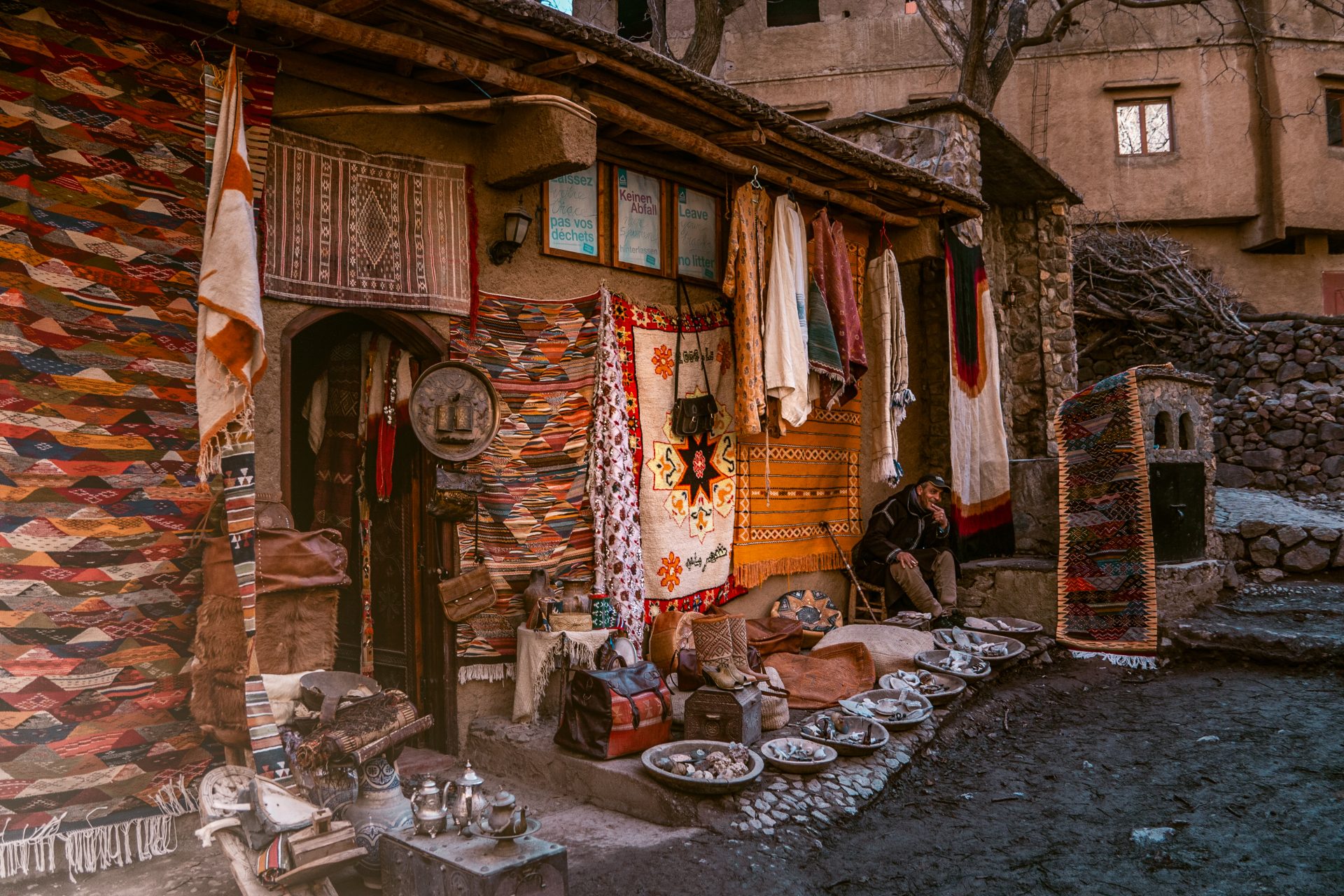
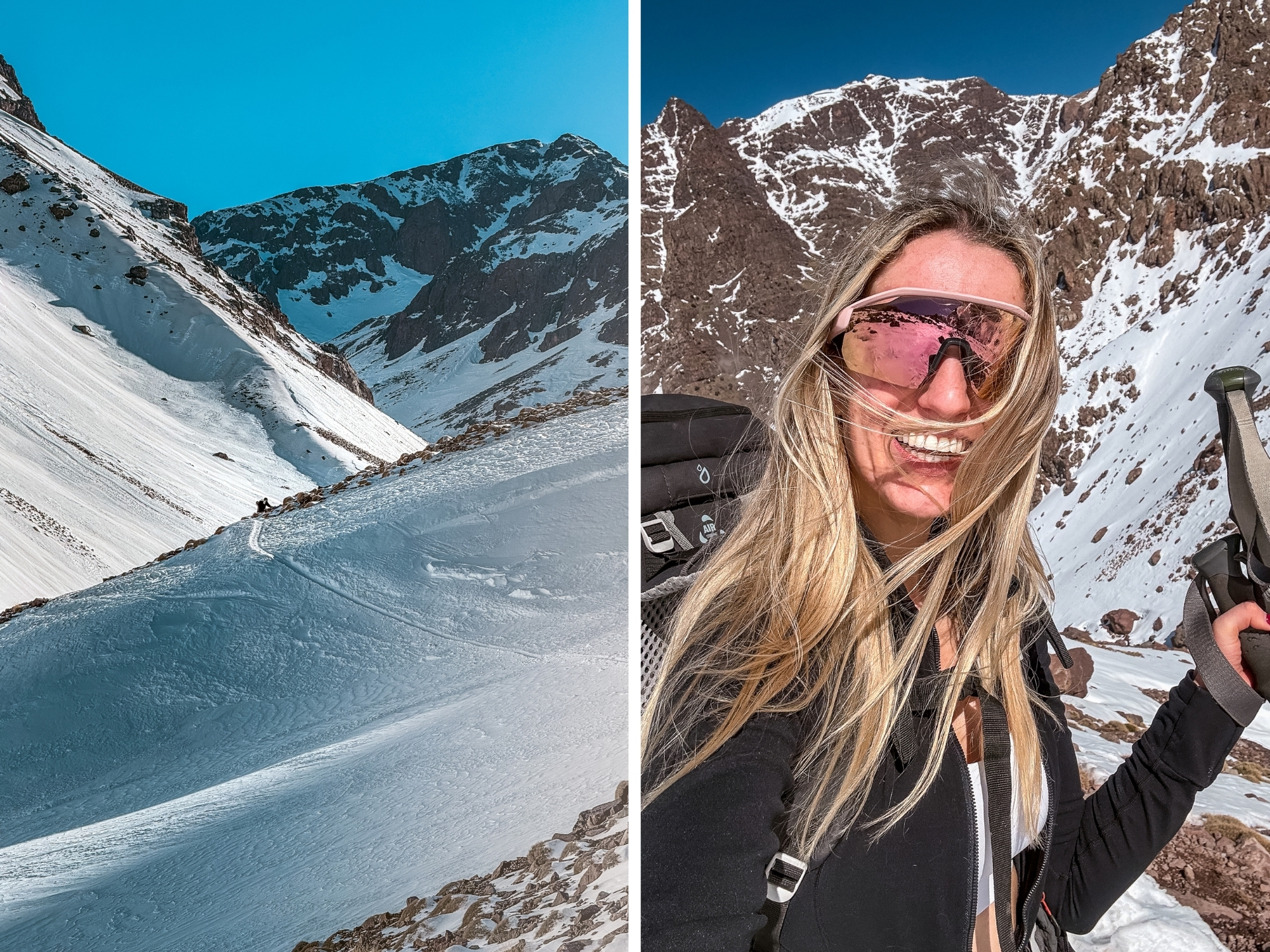
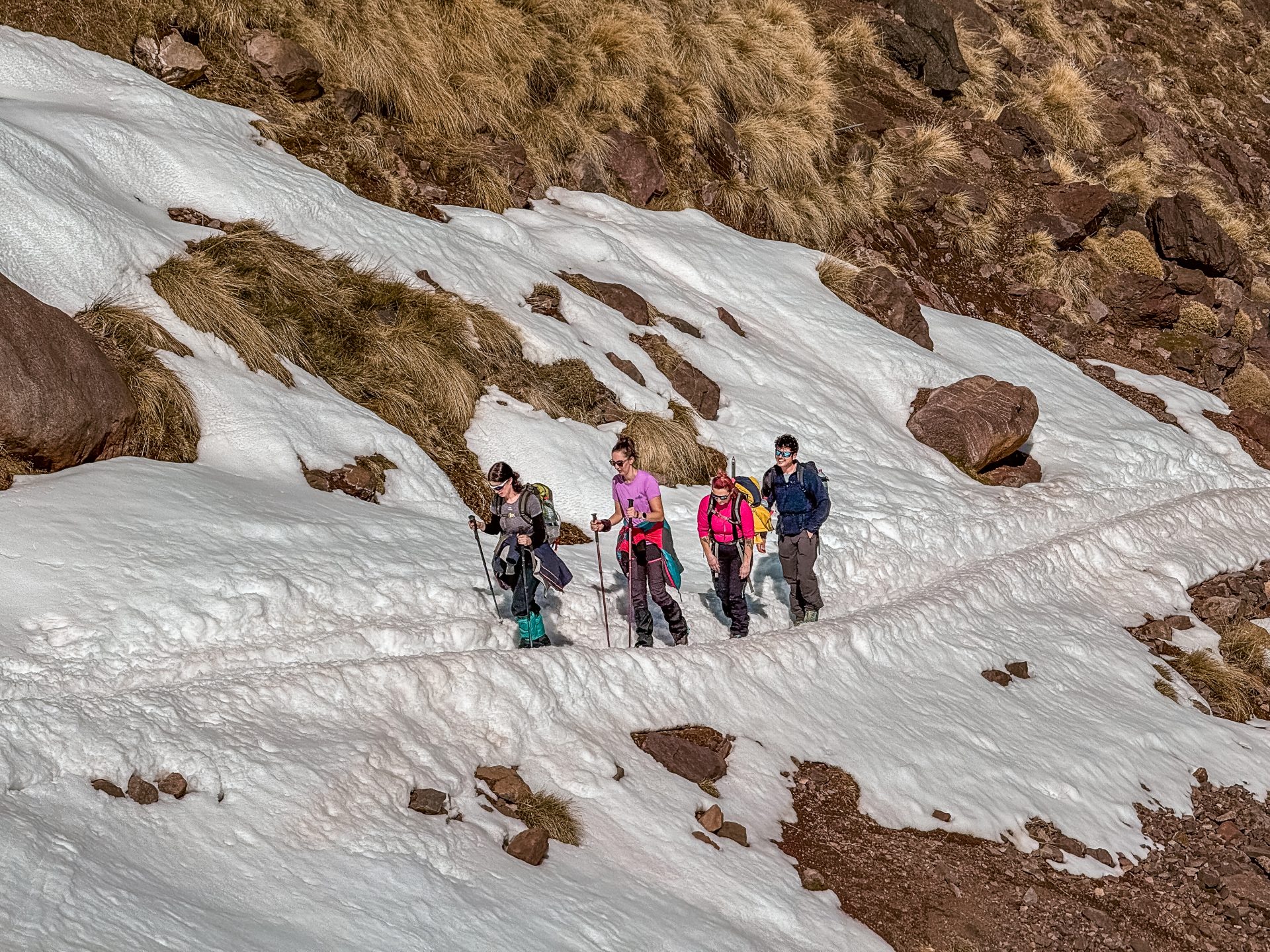
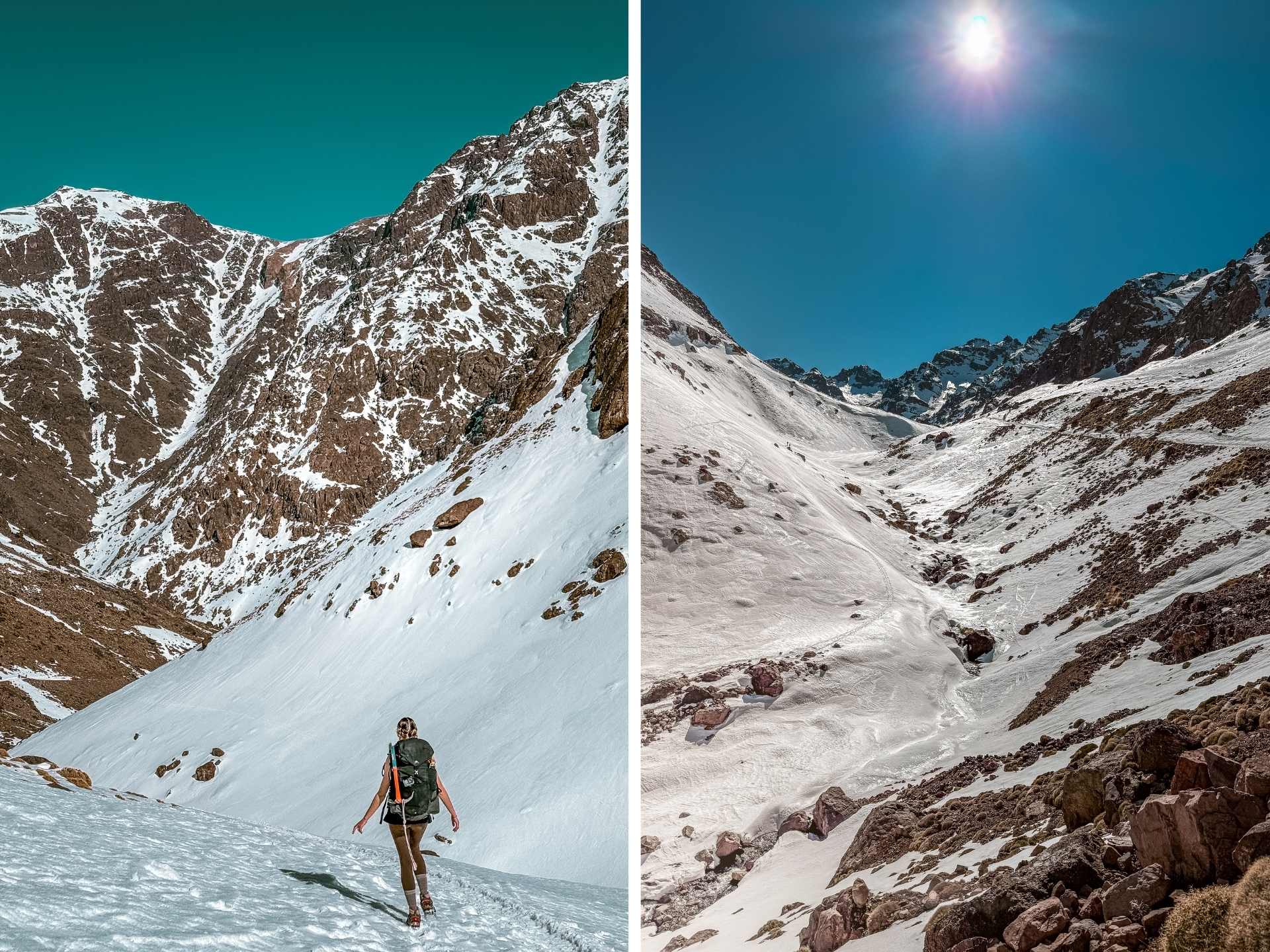
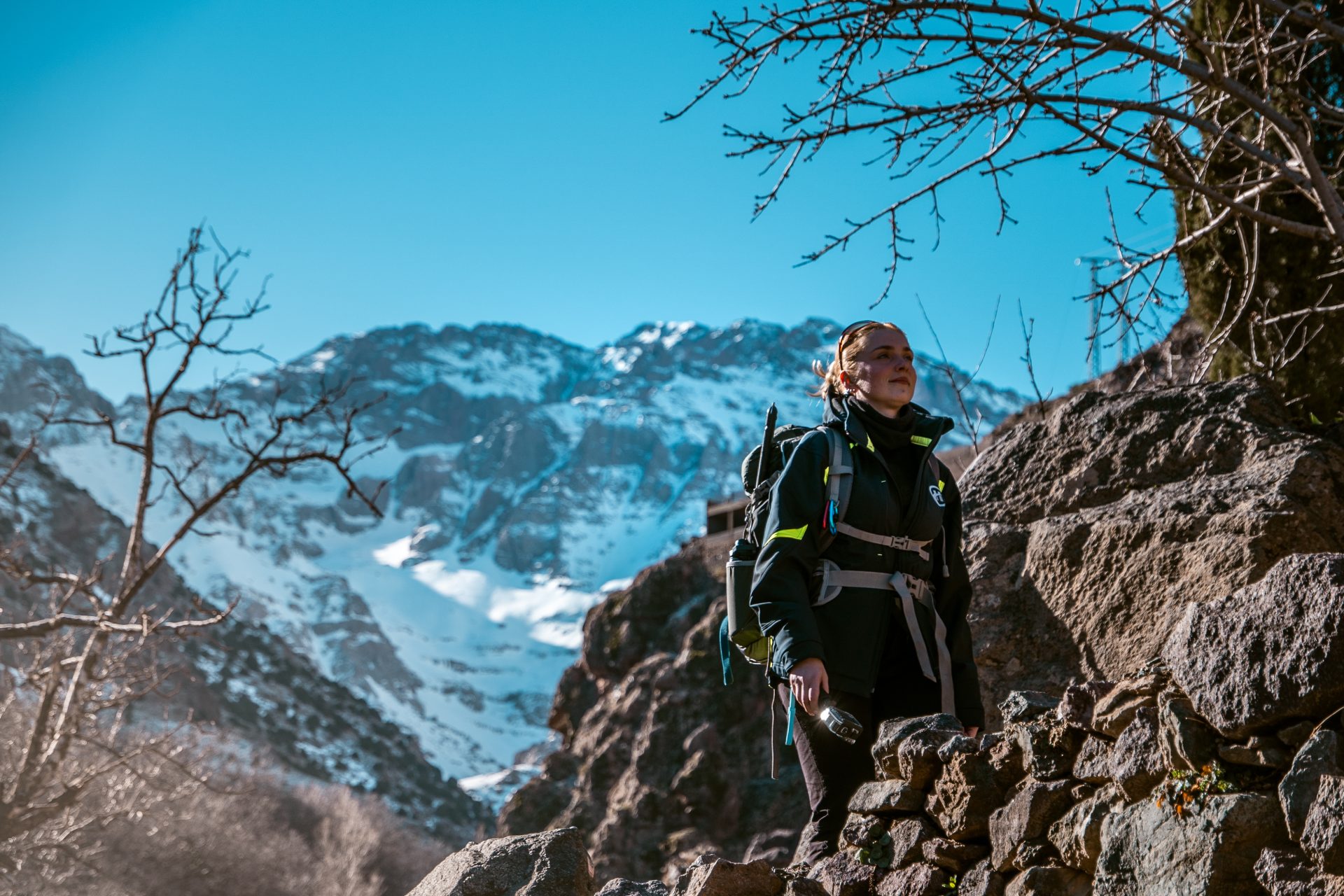
After a delicious and filling breakfast, it’s time to begin the hike towards the basecamp. The crisp morning air slowly gives way to the first rays of sunshine as we pass a few cosy little shops where women sell handmade jewellery, among other things. We walk through a small forest, and feel our heart rates rising and our breathing becoming heavier. Imlil sits at around 1,800 meters above sea level, and our bodies need a moment to adjust to the thin mountain air. Once we leave the village behind, we cross a vast open plain, with snow-covered mountain peaks already rising in the distance.
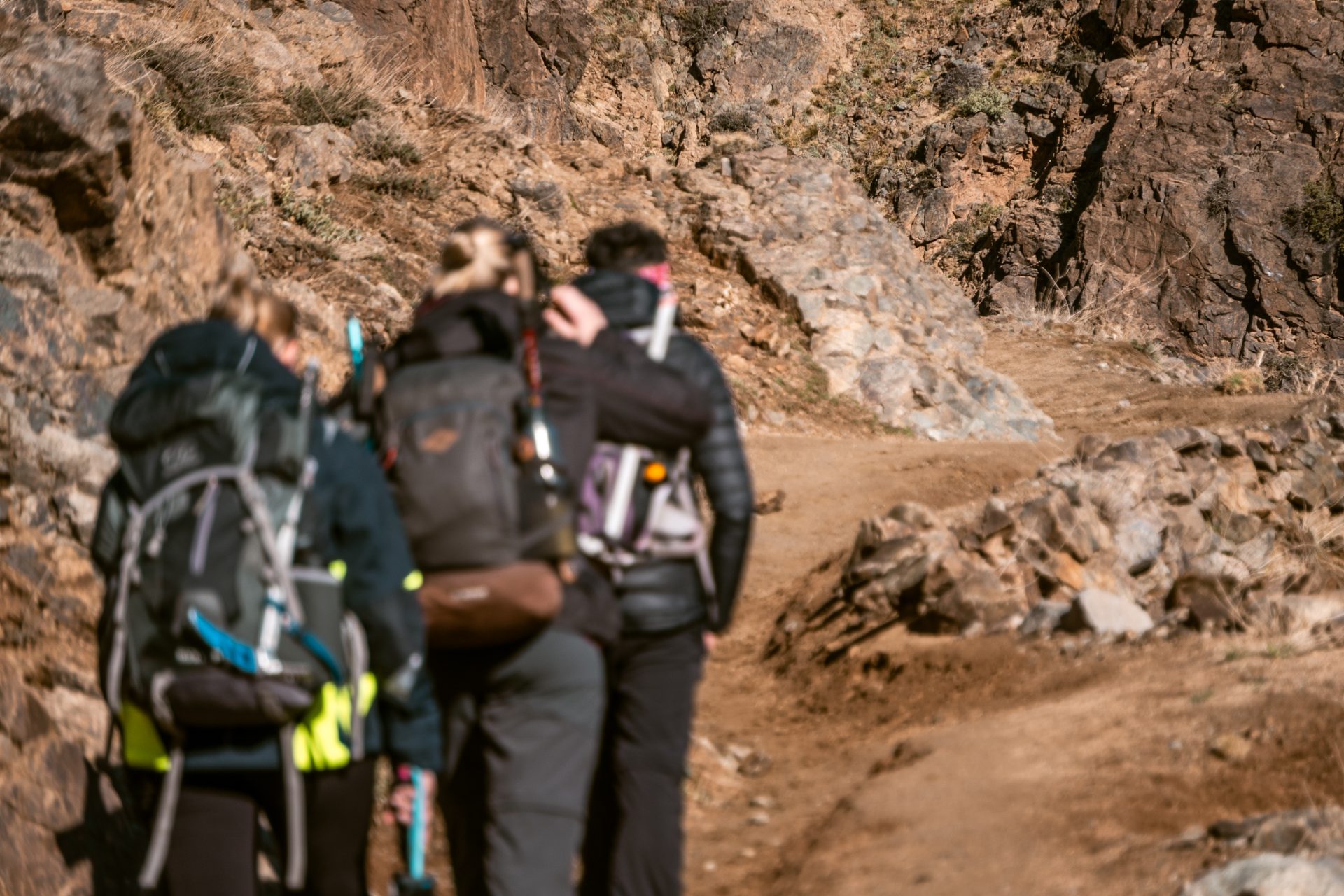
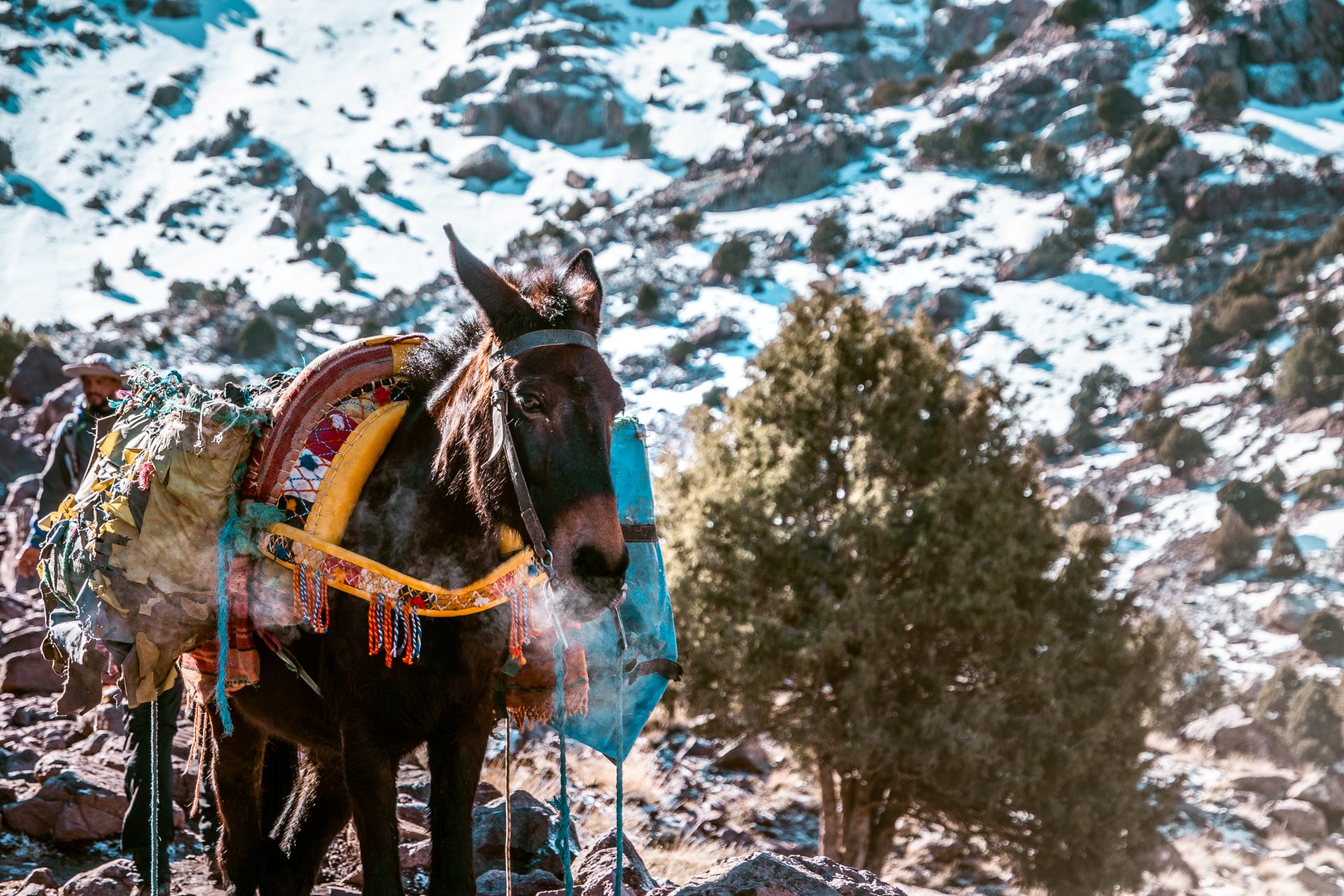
The first section — up to the spot where we stop for a delicious lunch — takes us across a rocky landscape, dotted here and there with green trees that bring colour to the scenery. Along the way, we pass donkeys carrying heavily loaded supplies to the villages higher up. During the winter months, however, they can no longer reach the refuge, forcing men to carry everything up themselves. We watch an elderly man visibly struggling under the weight on his shoulders.
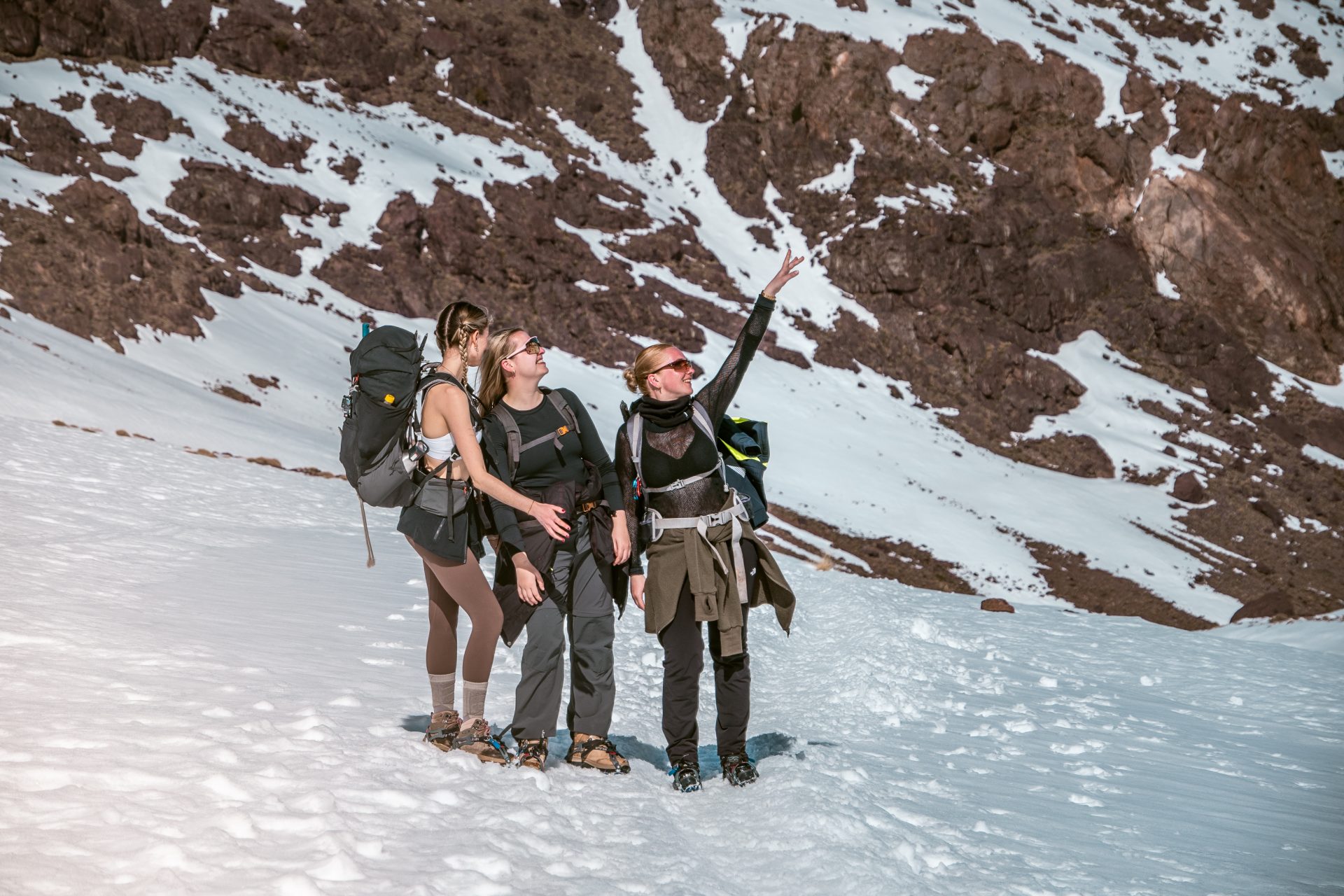
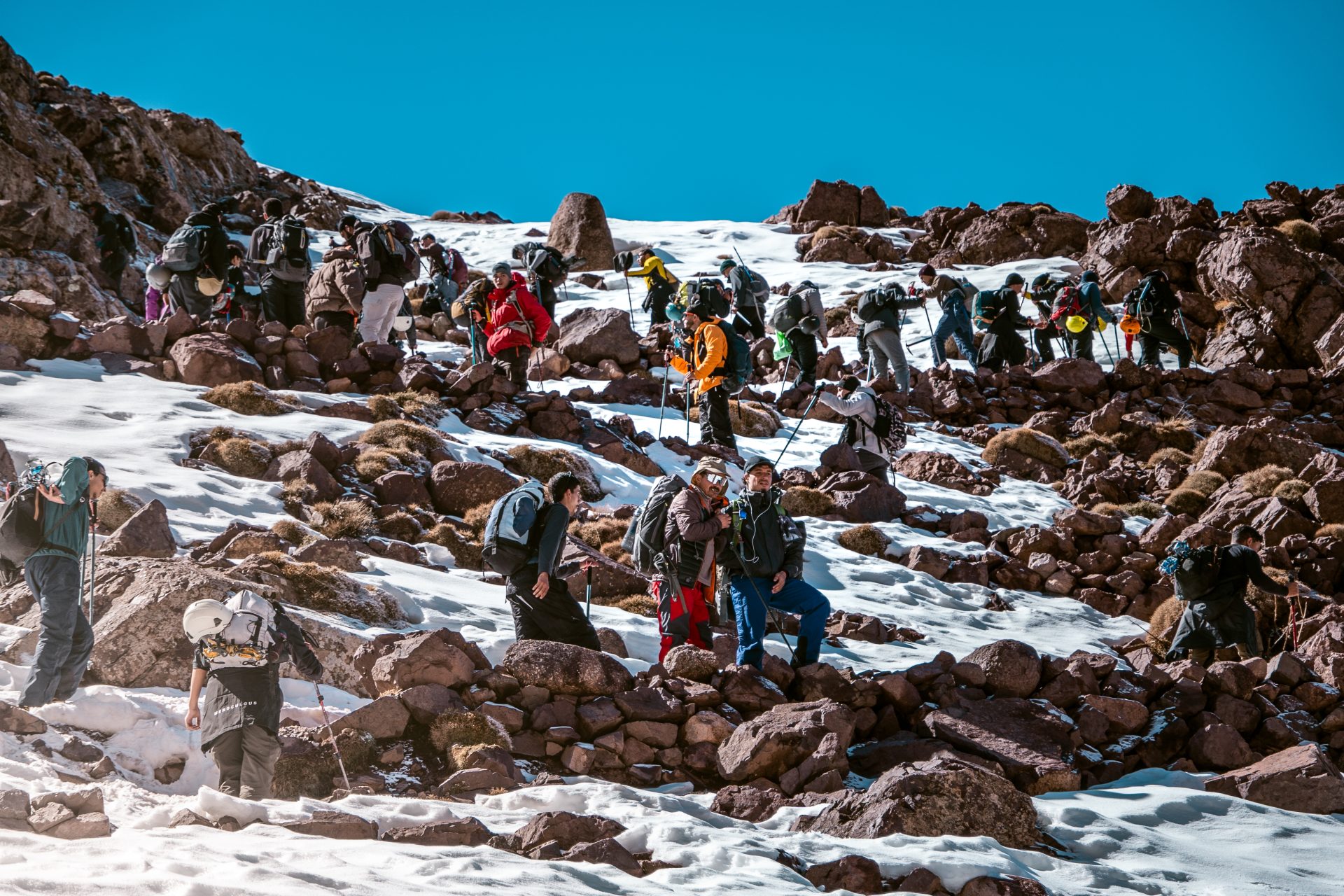
After lunch, it’s time to strap on our crampons and tackle our first steep and demanding climb. The hike towards basecamp, located at 3,207 meters, is challenging but absolutely manageable with a decent basic level of fitness. At that point, we still have no idea what awaits us on day two.
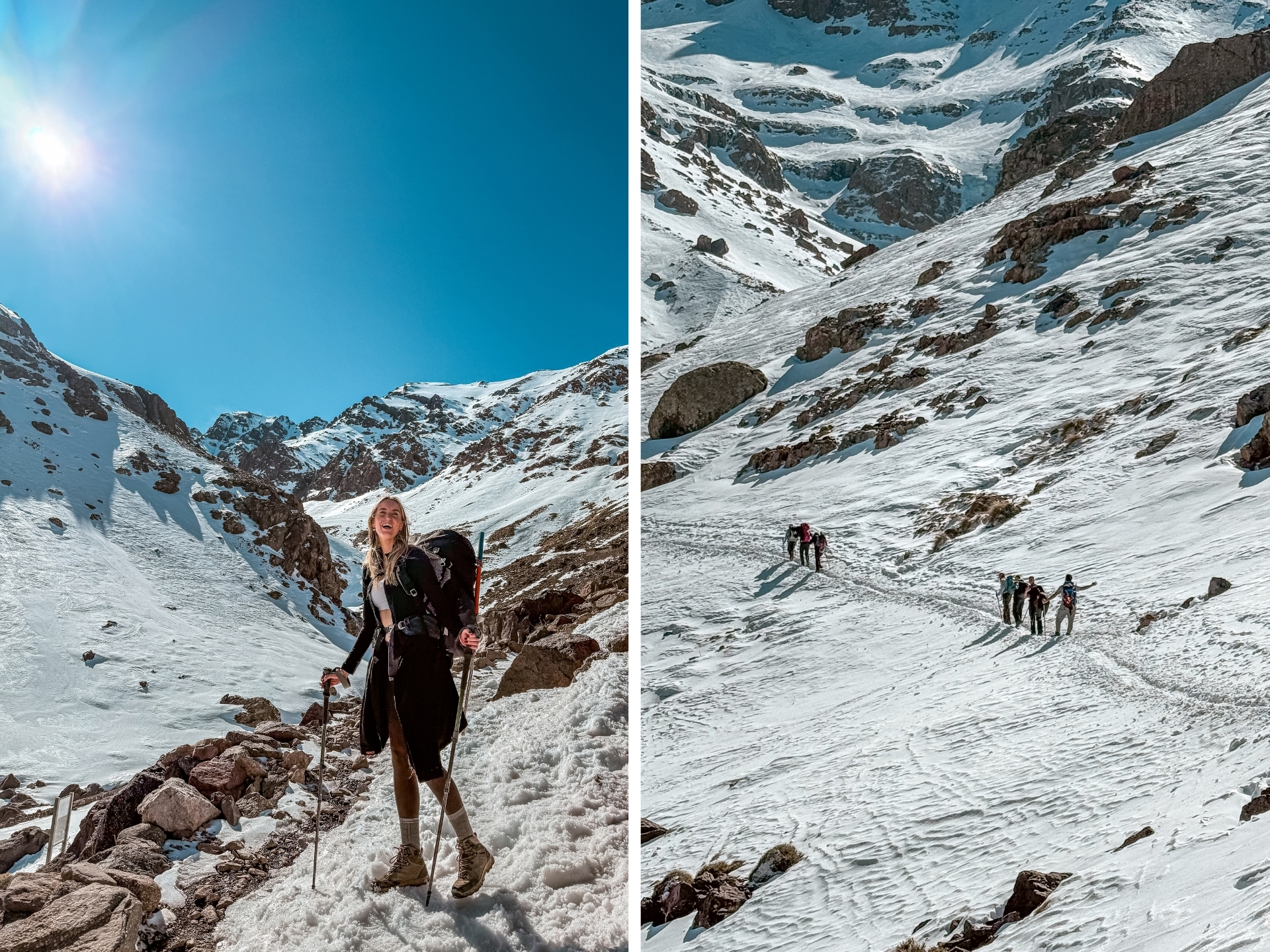
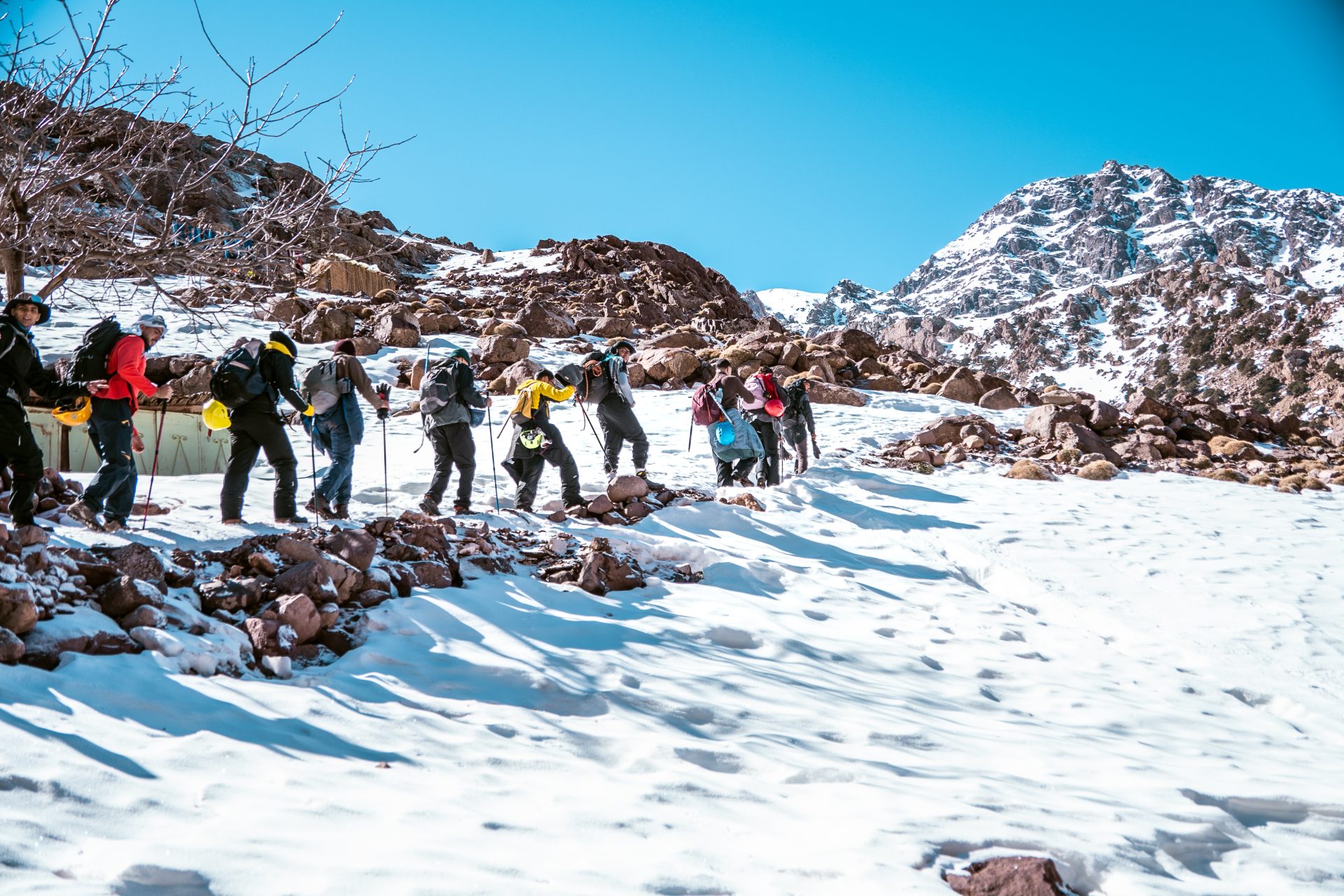
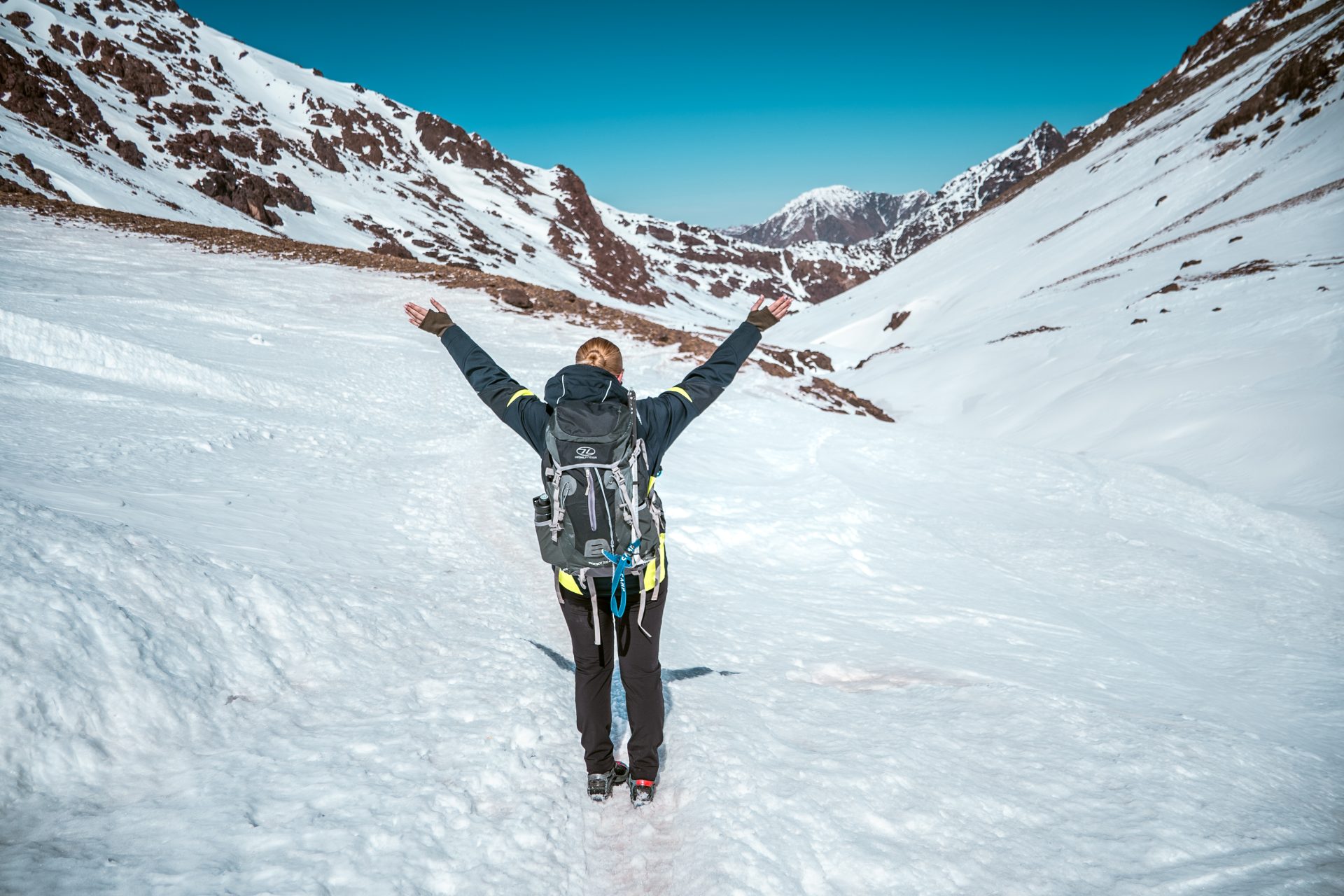
I soak in every second of the endless white landscape and the spectacular views surrounded by towering mountain peaks. The sun is shining brightly, there’s barely any wind, and we truly couldn’t have wished for better weather conditions. Just one week earlier, the trail had been closed due to an avalanche that claimed the lives of three hikers — a stark contrast to the pleasant temperatures we are experiencing now.
I arrived with very few expectations and barely any preparation, which only makes the surprise greater when I realise what an incredibly beautiful hike this is. Along the way, we pass cosy little stops where we can take a break and admire the breathtaking scenery with a glass of Moroccan mint tea in hand. Or a Coke and a Snickers bar — exactly the kind of energy boost we need.
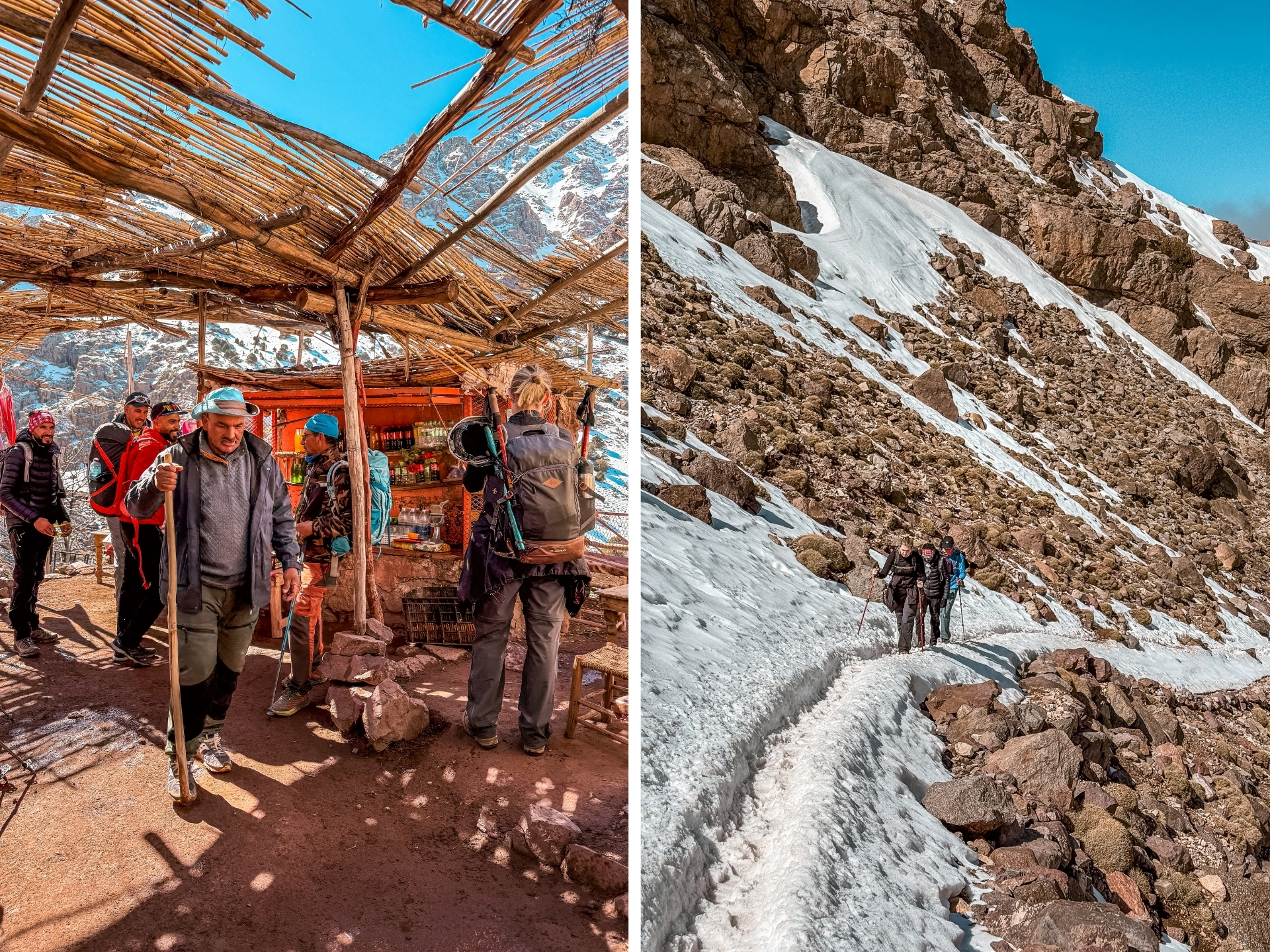
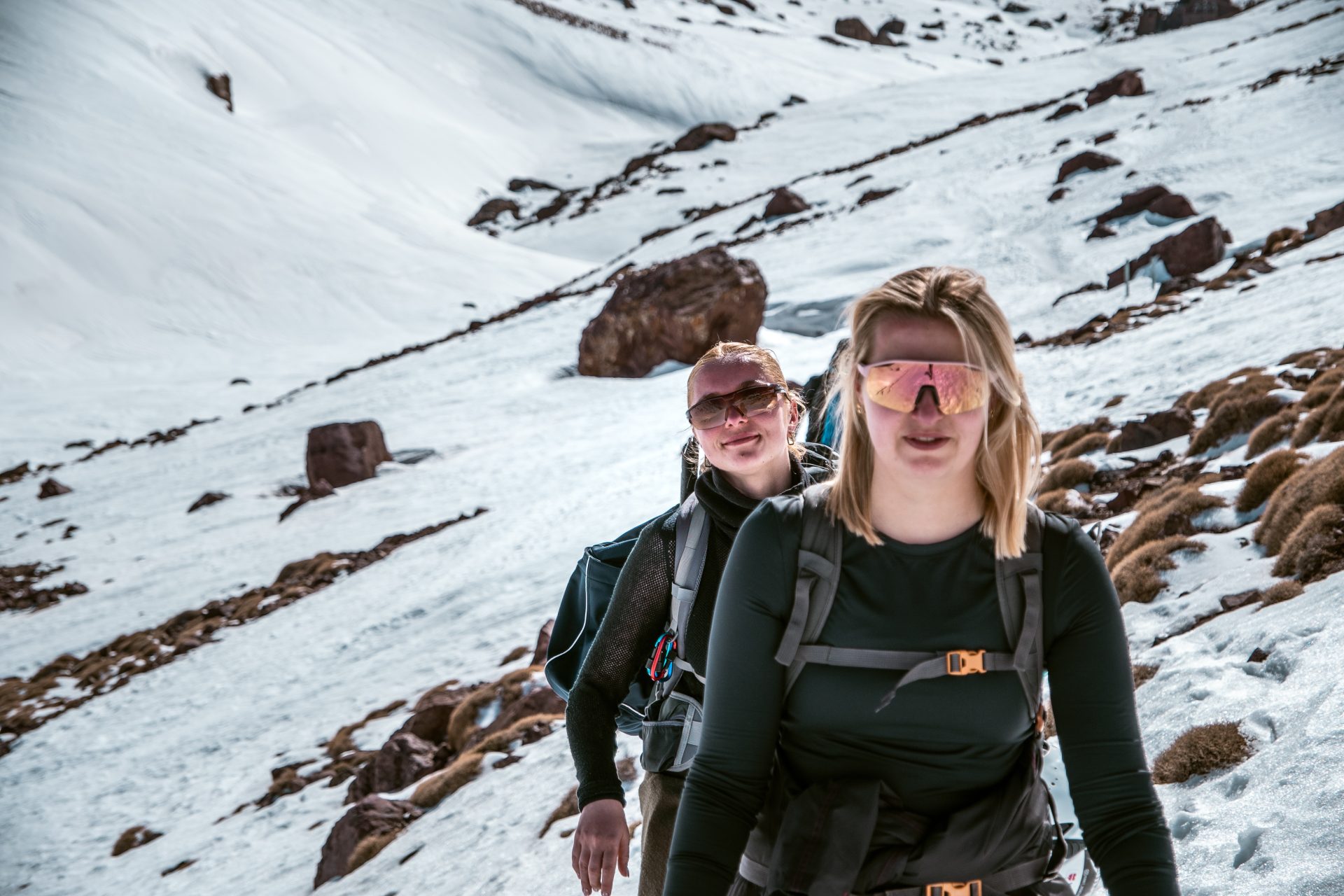
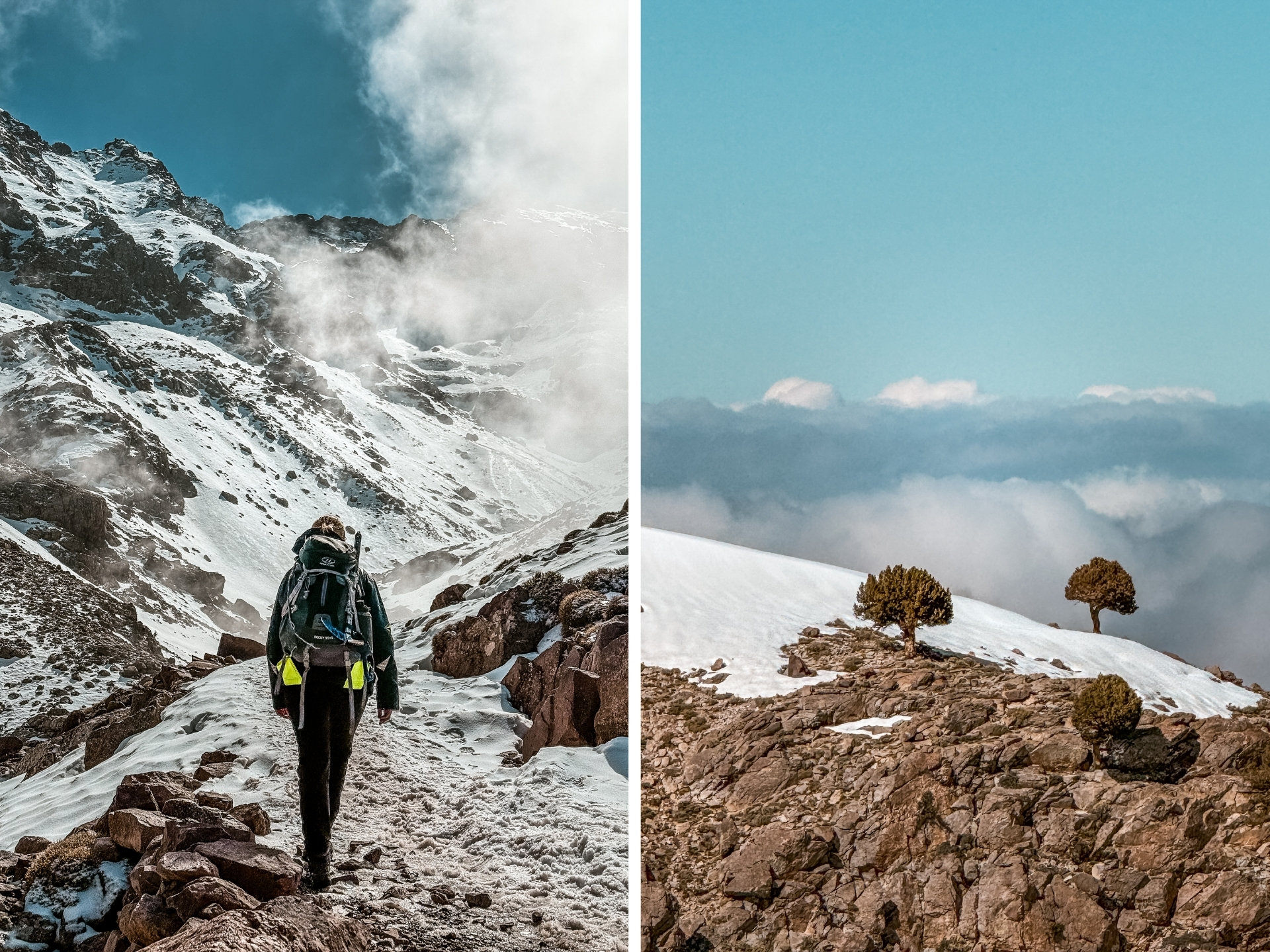
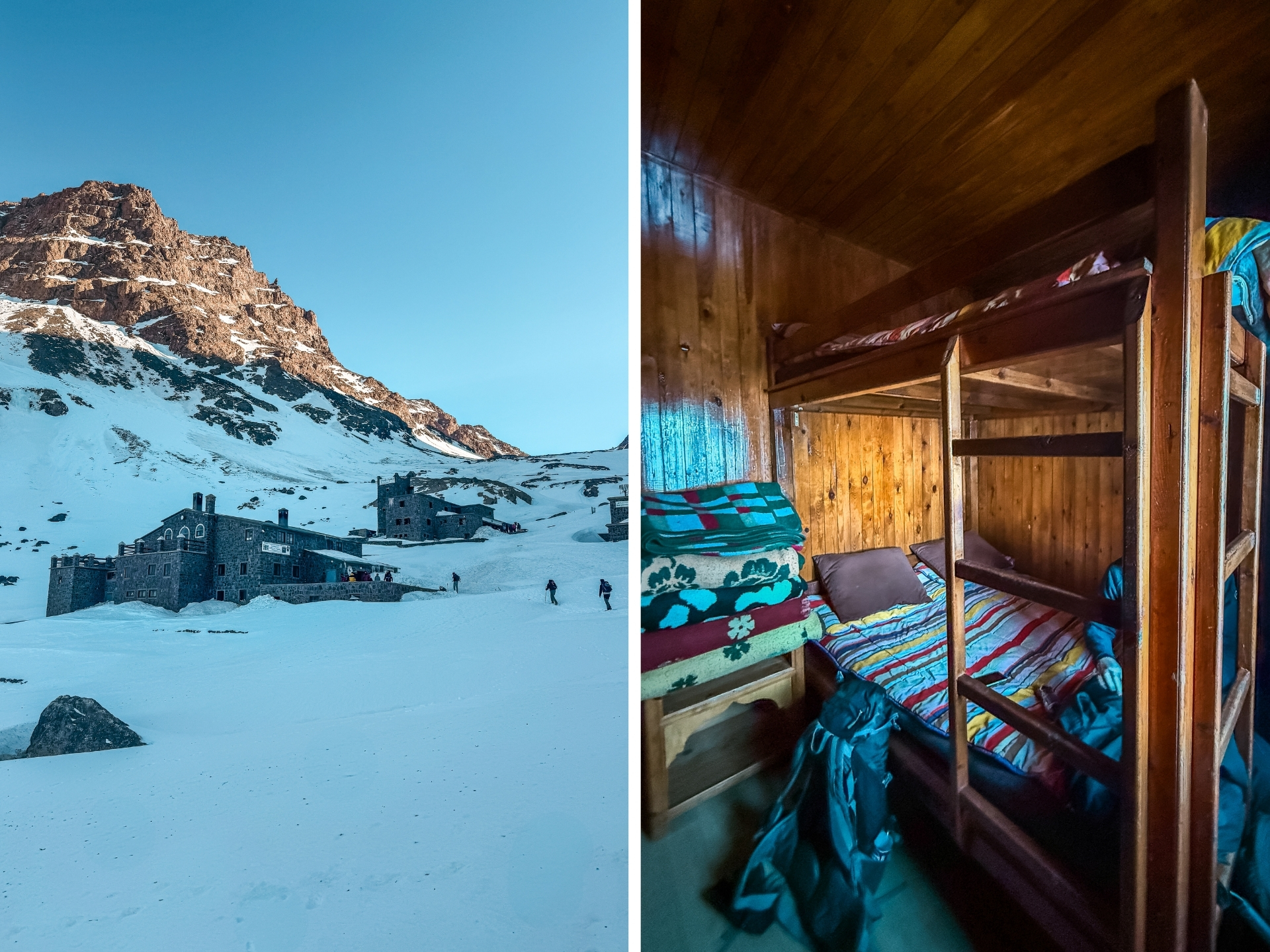
Late in the afternoon, the sun slowly disappears behind the mountains, and my hands turn white from the cold. I feel relieved when, in the middle of the vast white landscape, I finally spot Refuge Toubkal Les Mouflons in the distance. With no electricity available, the refuge is dark and slightly damp, and large groups of hikers gather around the only source of warmth: the crackling fireplace in the common room. They play games, drink Moroccan mint tea to warm up, and enjoy a well-earned dinner.
My girlfriends and I are assigned a private room and crawl into bed early — sweaty, exhausted, and filthy. It would become the coldest and worst night of our lives.
Day 2: Reaching the summit of Mount Toubkal at 4,167 meters
Refuge to Mount Toubkal & back to Imlil – aprox. 19km // 8-11 uur hiken
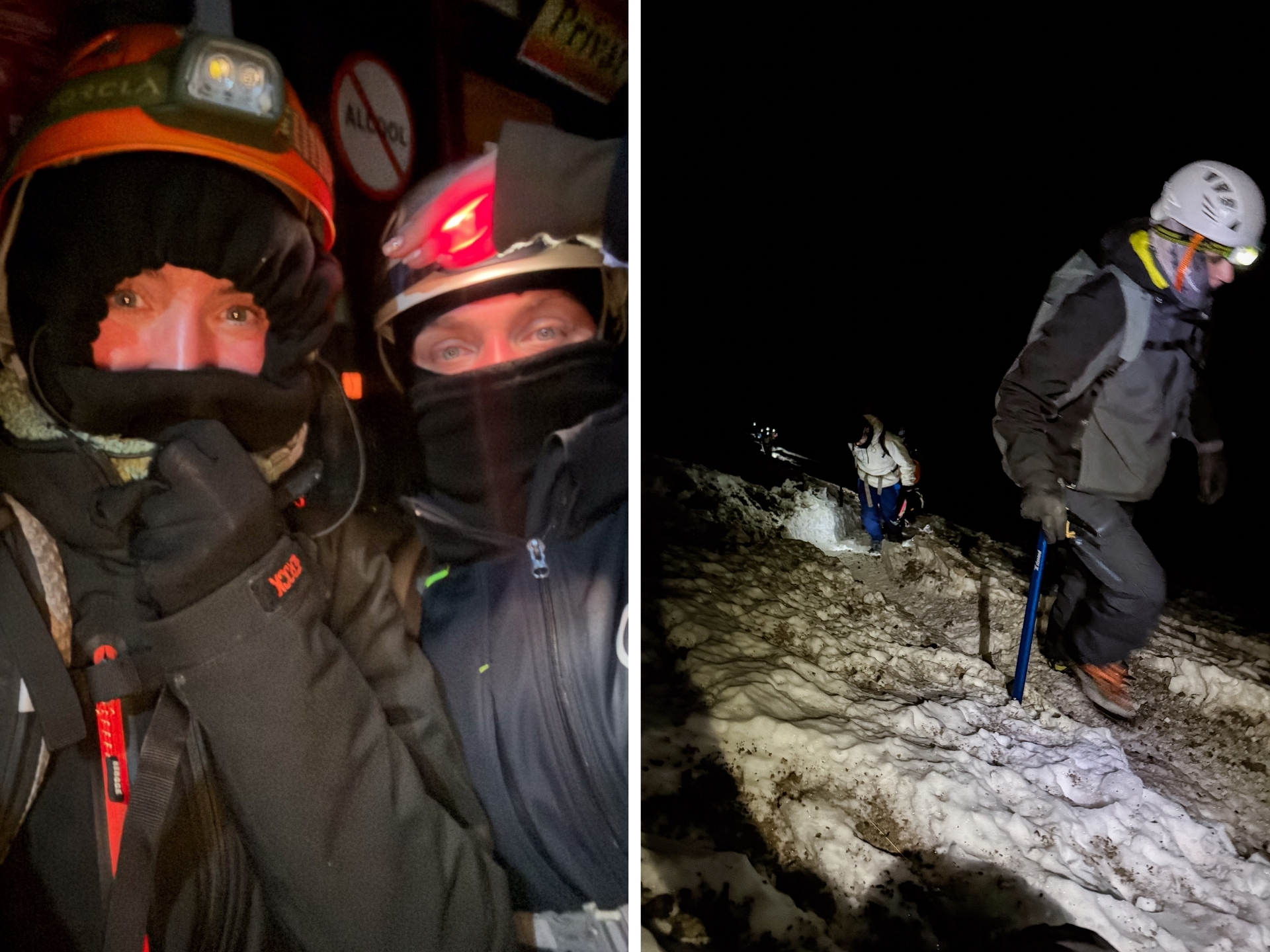
Our alarm goes off at 3:30 a.m., but by then we still haven’t slept a single minute. The cold was unbearable, and despite sleeping in our ski clothes — including hats and gloves — we simply couldn’t fall asleep. Exhausted and still freezing, we prepare ourselves for the climb to the summit of Mount Toubkal, standing at 4,167 meters above sea level. It is the highest mountain in North Africa and the third-highest peak on the African continent.
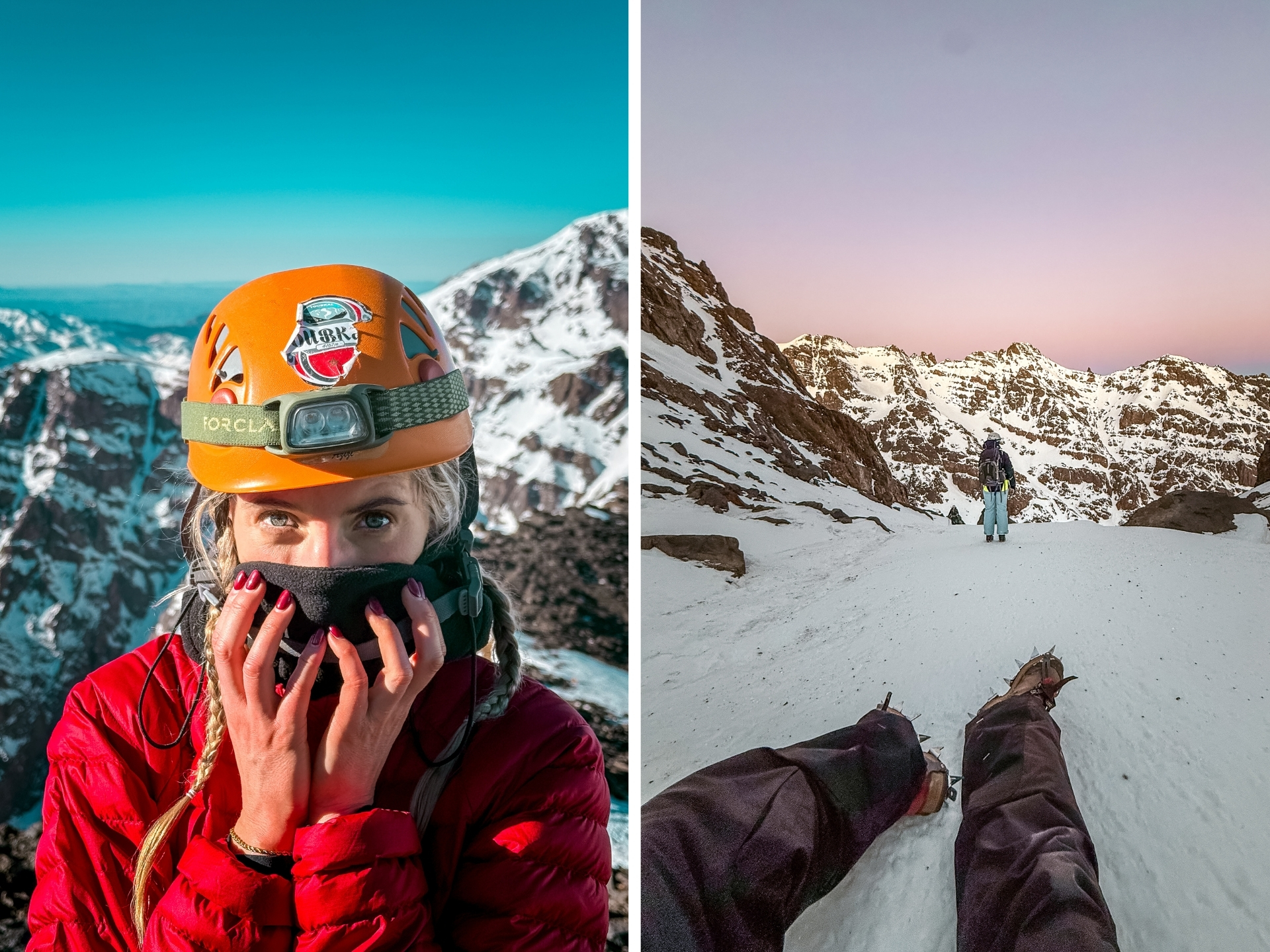
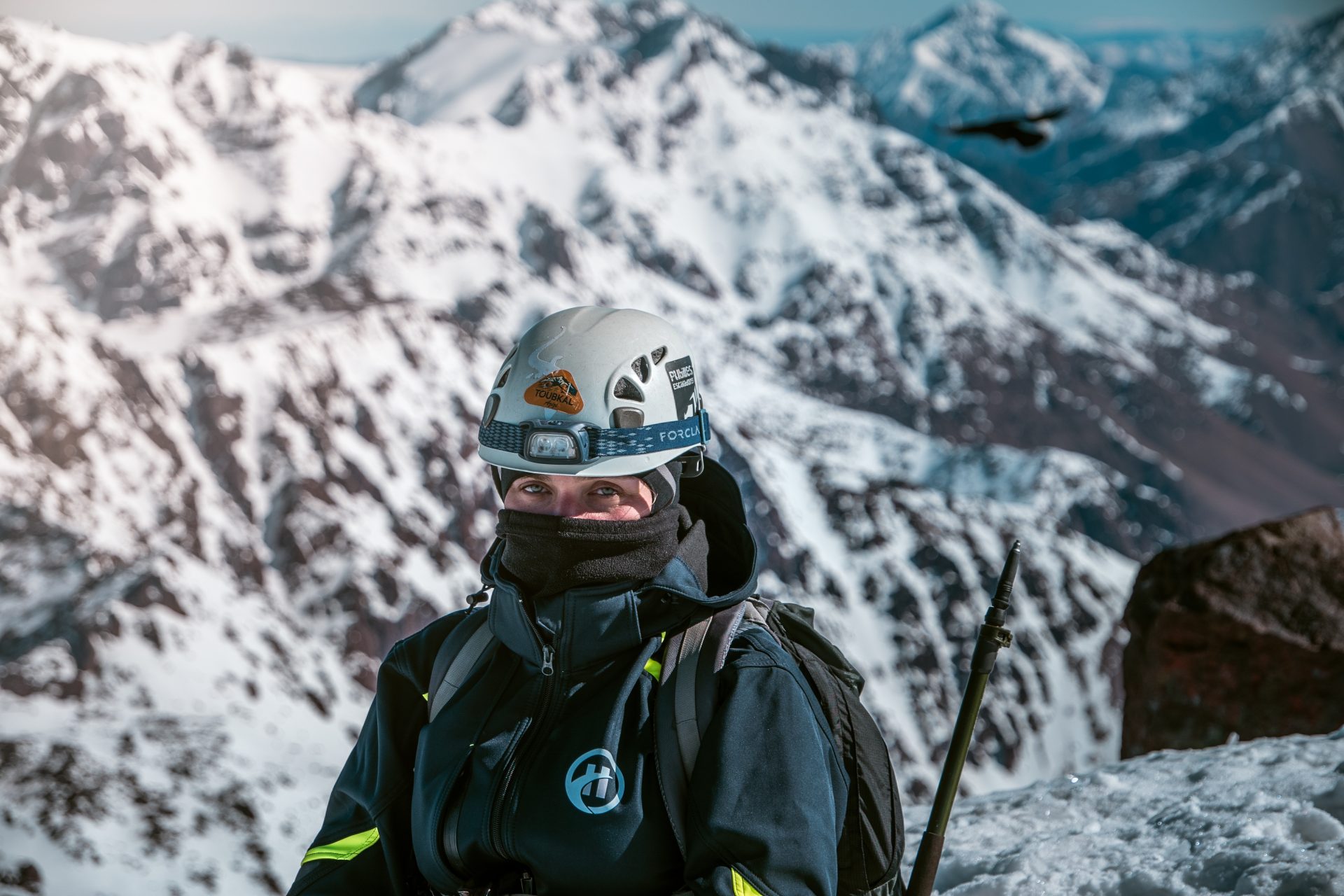
We leave around 5:30 a.m., crampons strapped to our boots, layer upon layer of clothing meant to protect us from the bitter morning cold, and headlamps lighting the way ahead. My friend Joni had already struggled a lot the day before and decides to stay behind at the refuge. Anastasiya and I step into the darkness, the landscape still completely wrapped in the shadows of the early morning.
The narrow trail immediately turns steep and demanding, illuminated only by the beams of our headlamps. The only sounds I hear are the crunch of snow beneath our feet and the heavy rhythm of our breathing, while in the distance, we can already see the lights of other hikers dancing across the mountainside.
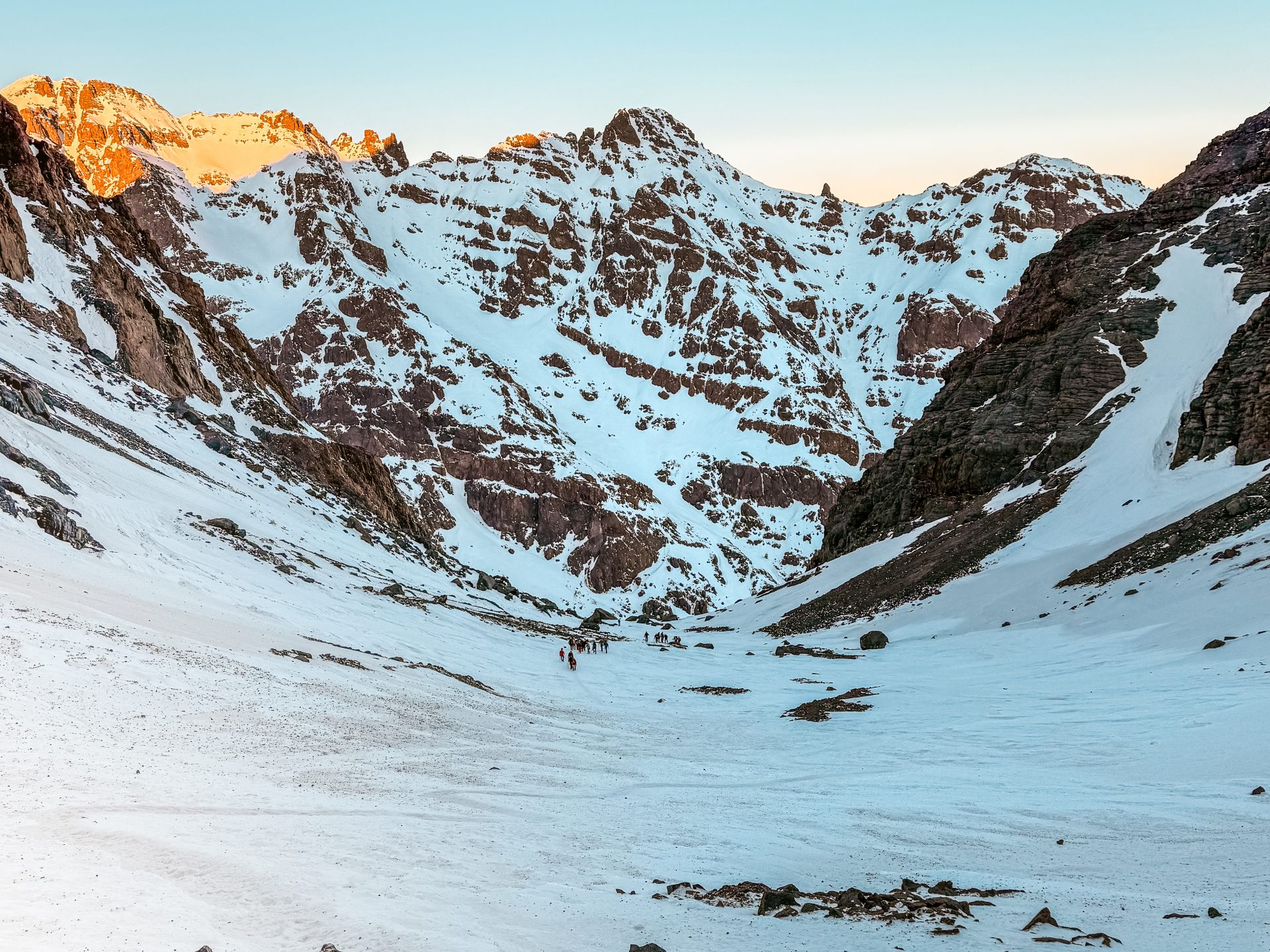
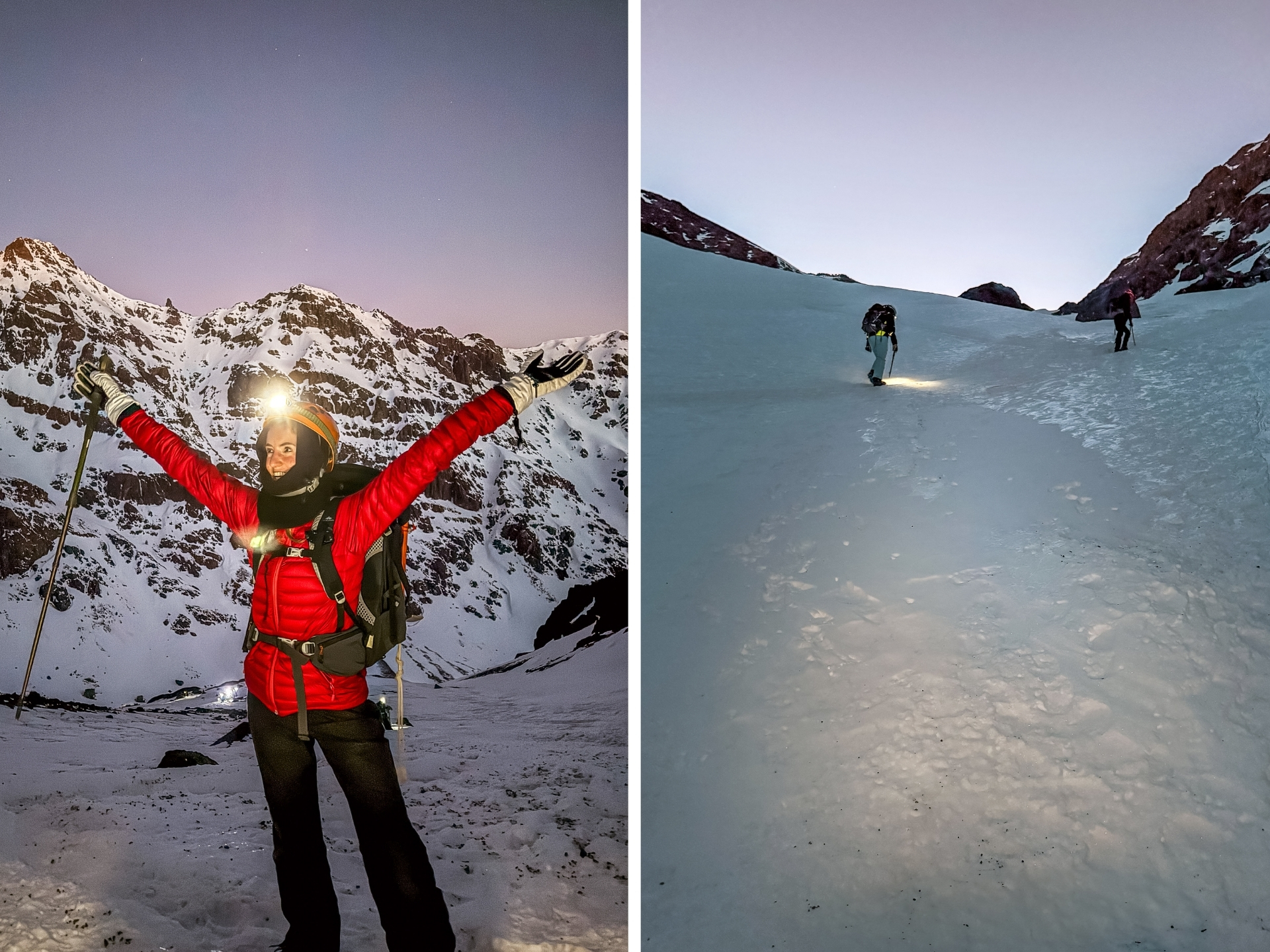 We already have a tough climb behind us when the sun begins to rise, casting a magical orange glow over the mountains surrounding us. The sky transforms into a palette of pink and pastel blue shades. It feels almost surreal. We find ourselves in the middle of a vast valley, taking in the views while we pause to rest and snap a few photos.
The climb continues until the altitude suddenly hits hard. During my trip through Peru, I experienced altitude sickness more than once, and the symptoms feel painfully familiar: my body feels weak, my stomach cramps up, and I constantly feel like I might throw up. On top of that, my hands ache from the cold despite the thick gloves I’m wearing.
I’m clearly not the only one struggling with the altitude, and we see more than a few hikers turning back before reaching the summit.
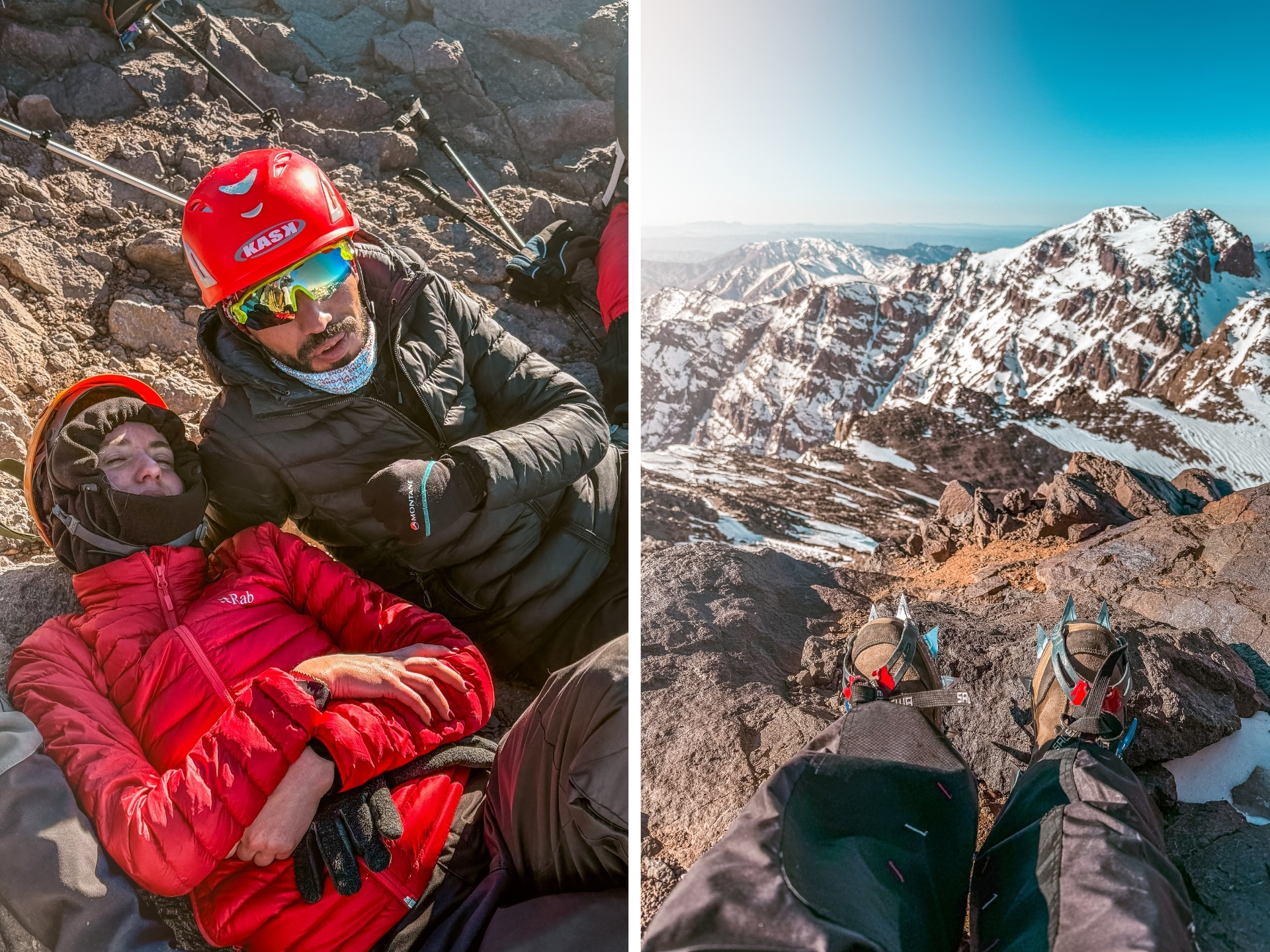
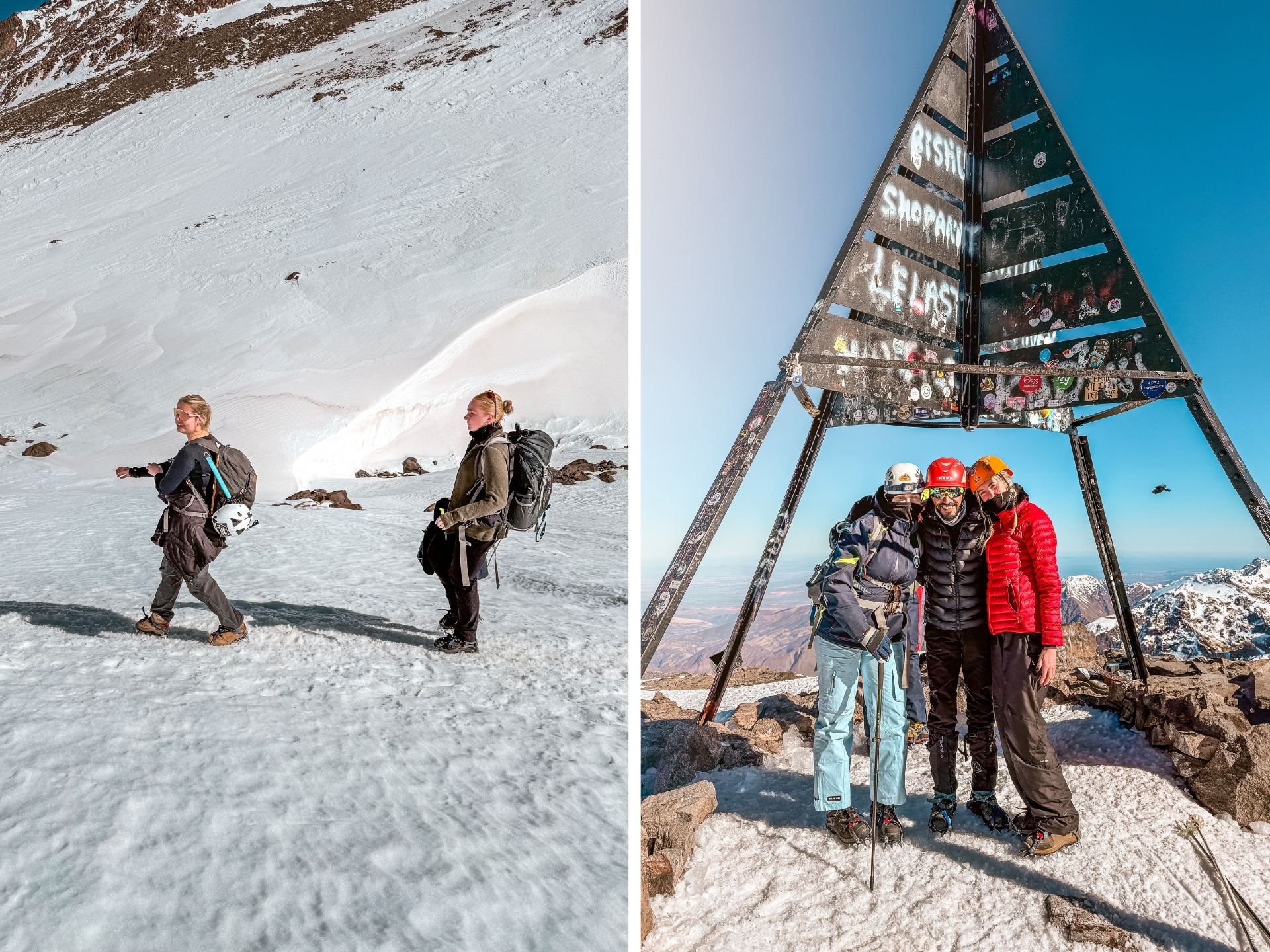
The climb continues, and every step starts to feel like torture. My body is screaming in pain from the sharp stabs in my already inflamed hip, and my knee is beginning to give up too. At one point, we think we’ve finally reached the summit, only to realise the real top is still far ahead. We still have more than an hour of hiking to go. For a moment, I seriously consider giving up — and honestly, I’m at peace with that decision. I look out over an endless landscape, surrounded by mountain peaks glowing in shades of orange. The moment feels so magical and beautiful that, for a little while, I forget about the pain and nausea. It gives me a new burst of energy to keep going, and suddenly the final climb towards the summit feels much easier. The closer we get to the top, the more adrenaline and excitement rush through my body. And then, there it is: the summit. I burst into tears of happiness as we stand beneath the famous metal pyramid at the top of Mount Toubkal, knowing how much it took for us to reach this moment. 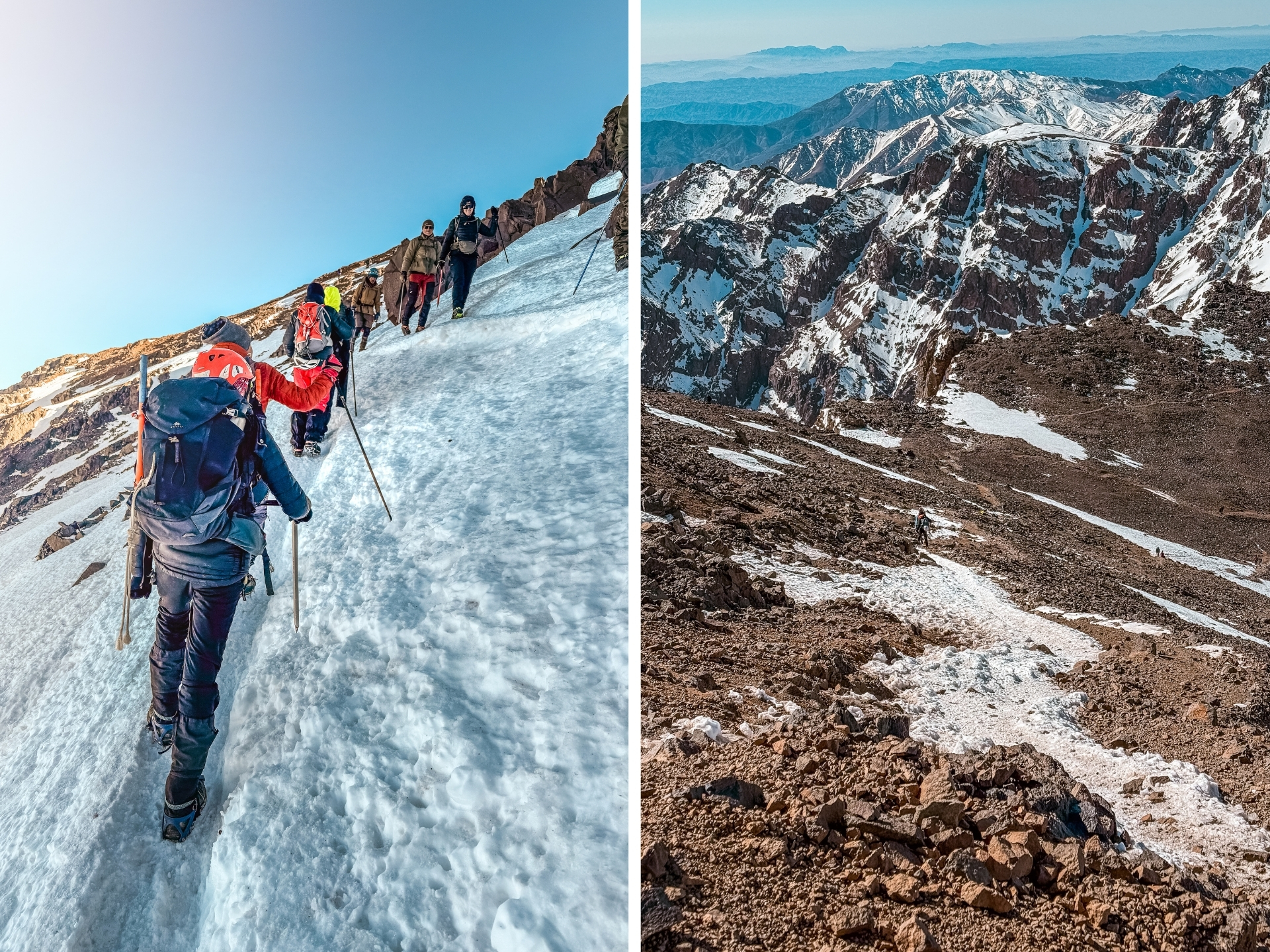
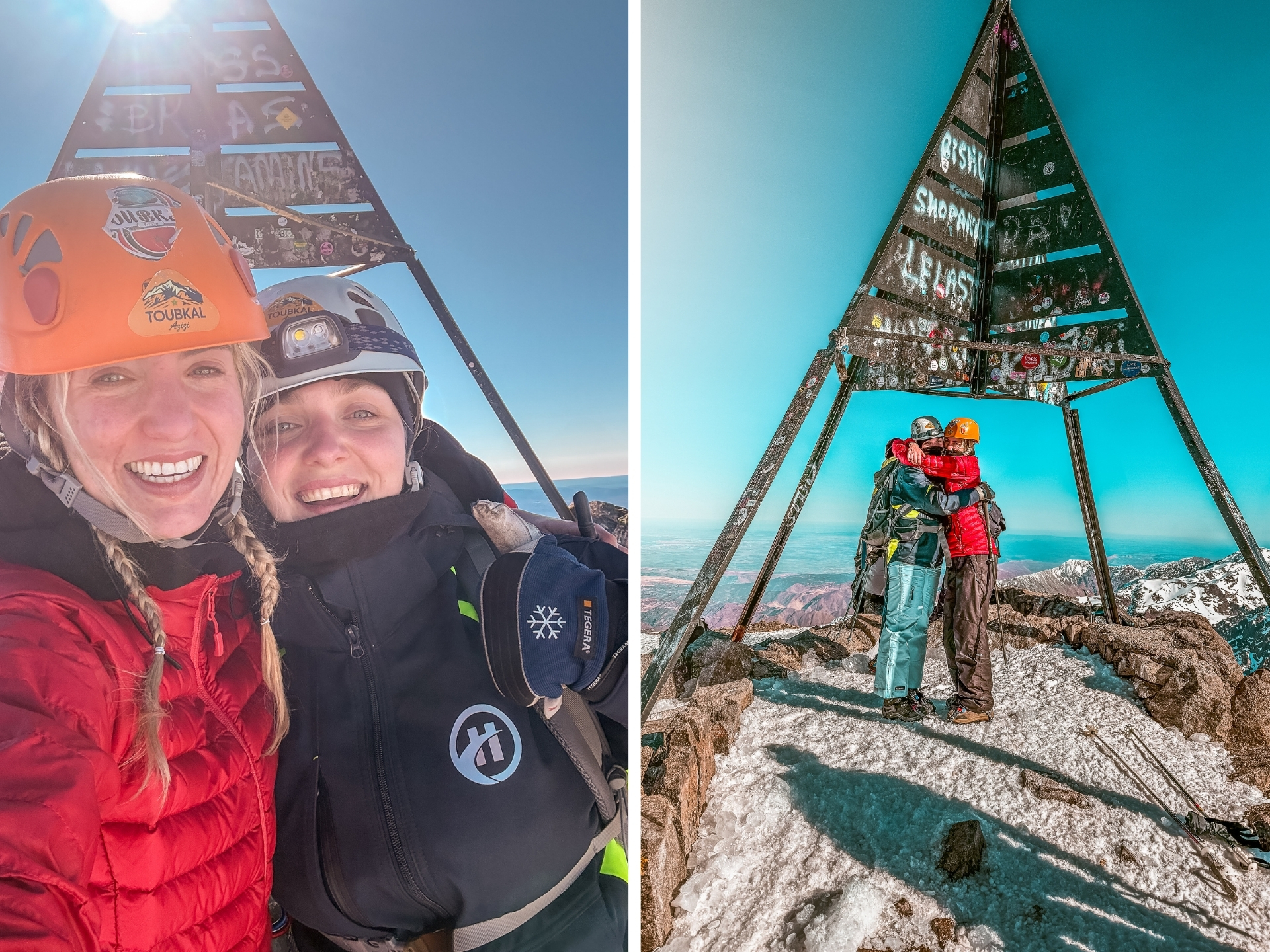
Day 2: Descending from North Africa’s highest peak
With a deep sense of happiness and accomplishment, we begin our descent a little over half an hour later. The way down is incredibly steep, and I can barely put any weight on my aching knee. My crampons constantly get caught in my wide ski pants, but Mustafa — our guide — lends me a hand throughout the entire descent and saves me from falling flat on my face more than once.
The hike back down to the refuge takes around three hours, and by the time we arrive, we feel completely exhausted. The sun is blazing now, and we swap our ski gear for lighter hiking clothes. While we sit outside enjoying the warm sunlight for a moment, I try to pet a cute cat that, in a playful mood, ends up scratching and biting me quite badly. The wounds immediately turn blue and look pretty nasty, but with no disinfectant available, we continue our journey back towards the place where our climb had started the day before.
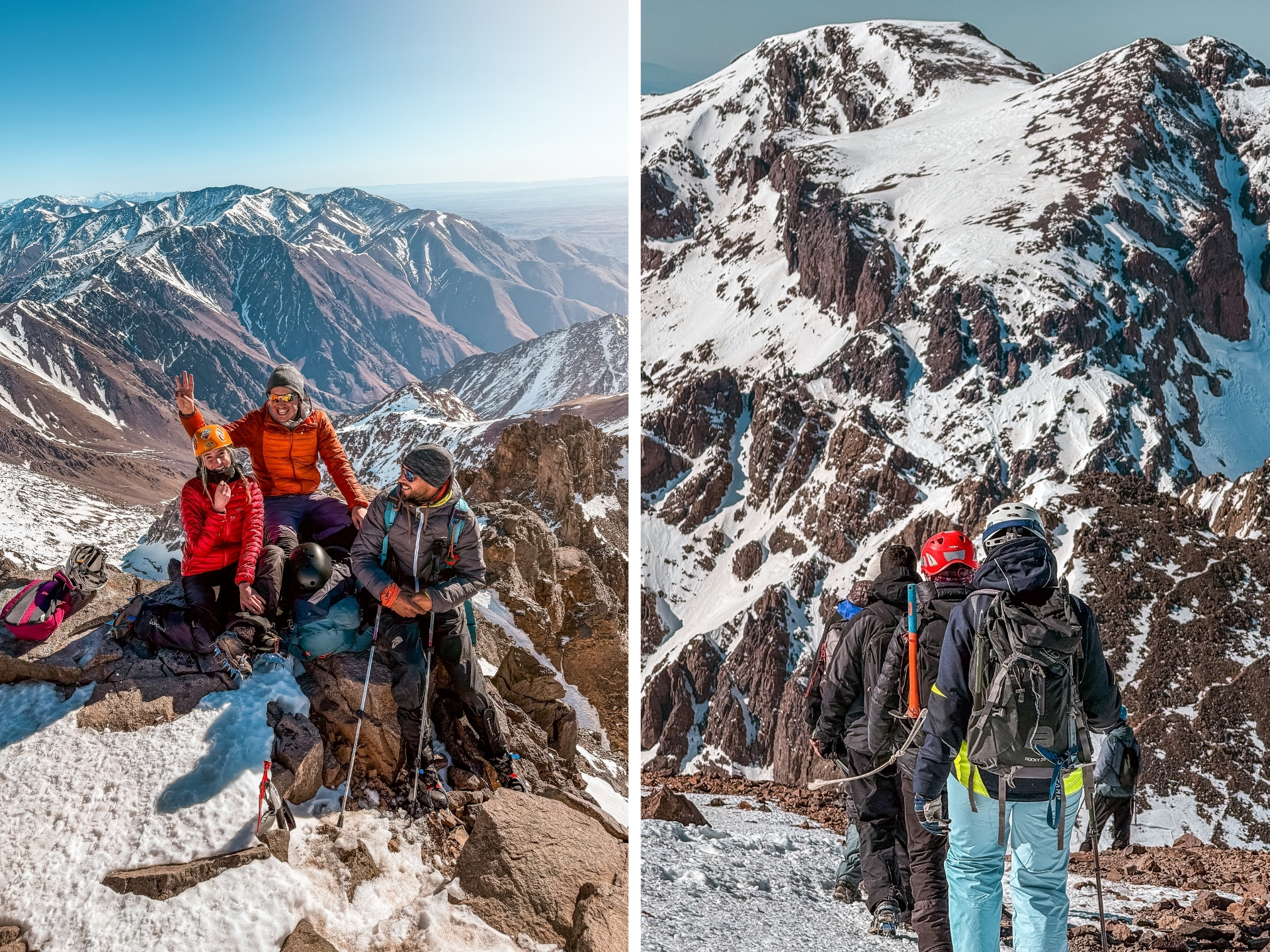
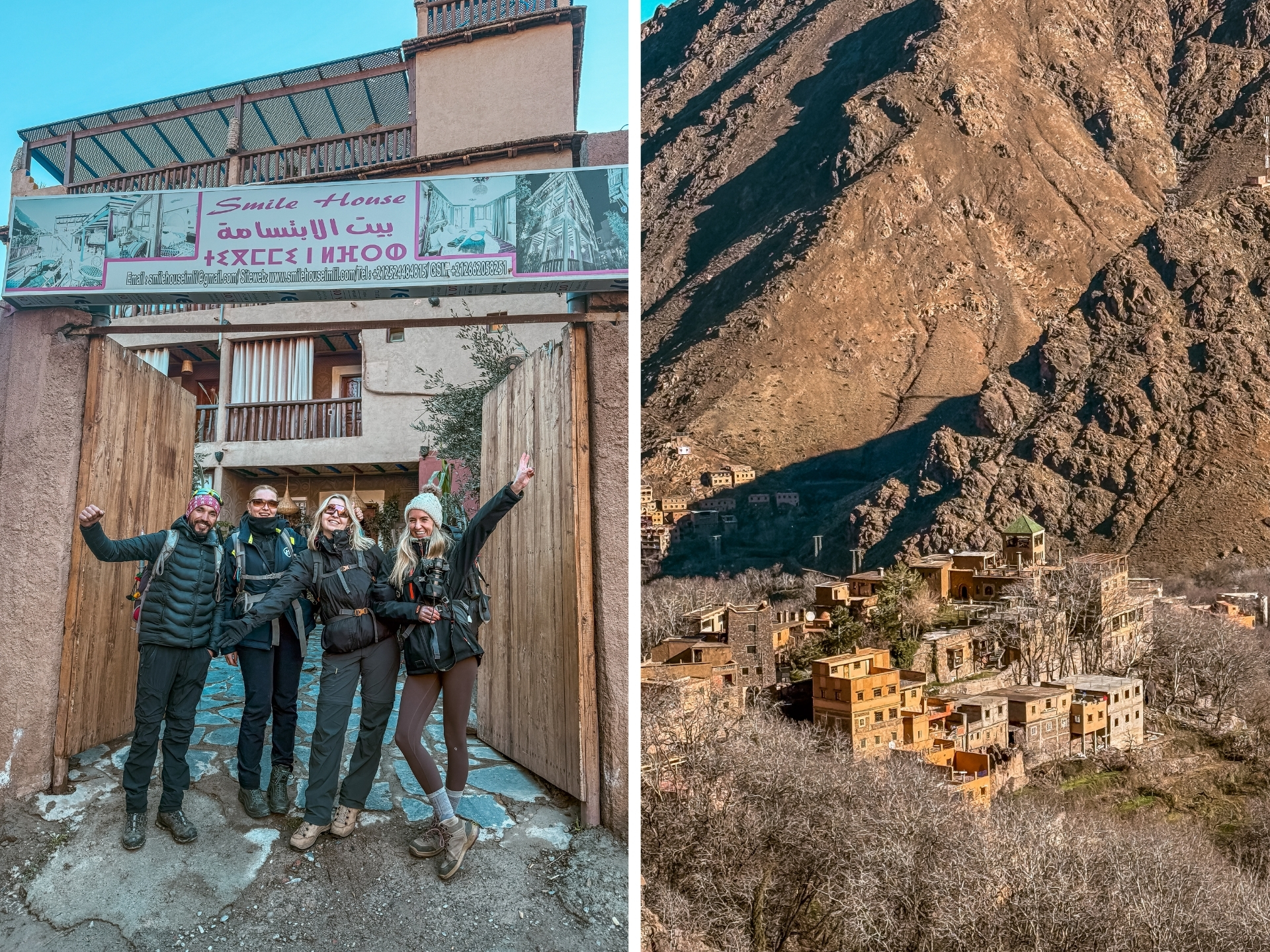
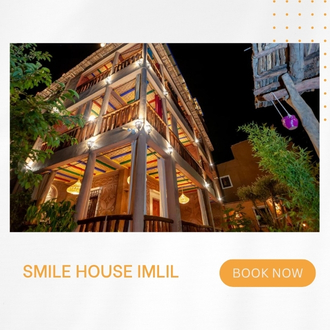
The descent itself isn’t too demanding physically, but we cover a huge distance that day, and the trail seems endless. Exhaustion starts to hit hard. Our bodies are drained, and all we can think about is a warm bed and a good meal. As the sun disappears behind the mountains, the temperature drops once again, making the final stretch feel even tougher. By evening, we finally arrive at Smile House Imlil. We had been on the move for nearly 11 hours that day, and we can hardly contain our happiness when we see the beautiful, comfortable room where we’ll be spending the night. We enjoy a hot shower that finally warms our tired, sweaty bodies again, followed by a steaming tajine beside the fireplace. Climbing Mount Toubkal was an adventure we will never forget. If anything, it has only fuelled my desire to climb even higher mountains. The physical — but especially mental — challenge, the overwhelming feeling of reaching the summit, and the joy of sharing this experience with your best friends… CORE MEMORIES!
Practical tips for climbing Mount Toubkal
Has my story inspired you to take on Mount Toubkal yourself — whether during the winter months or not? Then keep reading for some practical tips to help you prepare for climbing Jebel Toubkal. Here’s everything you need to know to conquer this peak!
How do you get to Imlil?
Anyone wanting to climb the highest mountain in North Africa will start their adventure in the charming mountain village of Imlil, located in Morocco’s High Atlas Mountains. (From Belgium), the fastest and easiest option is to fly to Marrakech. Direct flights from Brussels to Marrakech take around 3.5 to 4 hours. From Marrakech, it’s about another 1.5-hour drive to Imlil. You can:
- arrange a private transfer through your accommodation or tour organisation;
- take a shared taxi;
- or rent a car if you prefer travelling with more flexibility.
Find cheap flights to Marrakech
Where to stay in Imlil?
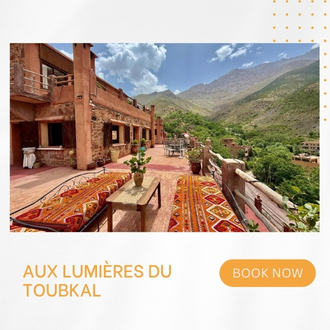
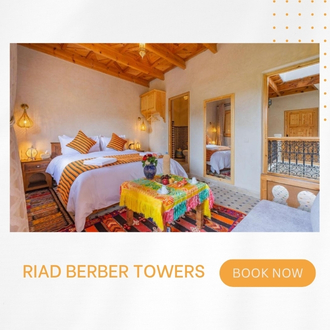
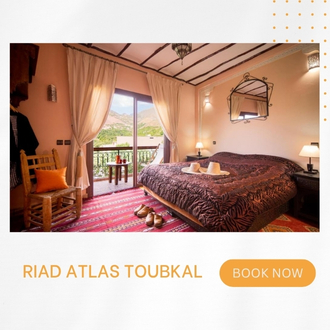
Imlil may be small, but it has a surprisingly large number of cosy guesthouses and traditional riads. Don’t expect luxury hotels, but do expect warm Berber hospitality, delicious food, and views so beautiful they leave you speechless. We stayed at Smile House Imlil, and I would book it again without hesitation. The rooms are spacious and comfortable, the staff are incredibly kind, and after two exhausting days on Mount Toubkal, that hot shower felt like pure luxury. The view from the terrace? Absolutely unreal.
Where to book your Mount Toubkal climb?
For the past few years, hiring a certified guide has been mandatory when climbing Mount Toubkal. You can either arrange everything locally once you arrive in Imlil or book your trip in advance through an organisation. Desert Surf Camp, and everything was organised perfectly from start to finish. Especially during a winter ascent, I found this to be a huge advantage. You don’t have to worry about logistics and can simply focus on the hike itself — and on surviving the cold. There are also plenty of local organisations in Imlil offering guided hikes to Jebel Toubkal, often at slightly cheaper prices if you book last minute.
You can also easily book your adventure to Mt. Toubkal through GetYourGuide
What should I pack for hiking Mt. Toubkal?
Good preparation truly makes all the difference, especially during the winter months. Temperatures can drop far below freezing, and conditions near the summit can become extremely cold and windy. The packing list below will help you get started. 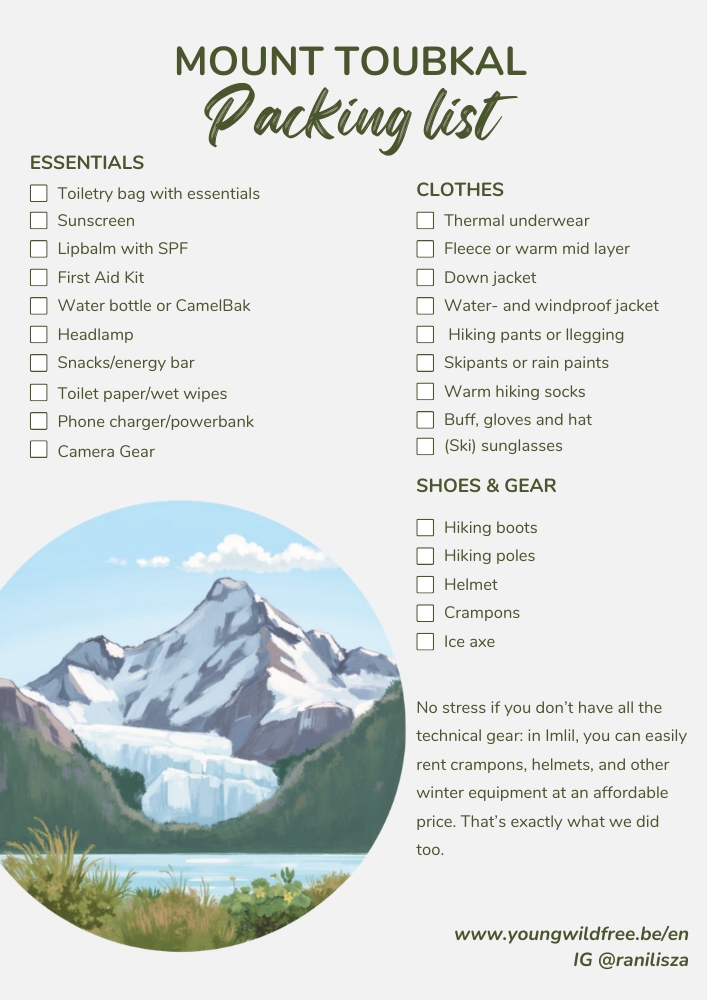
How should I physically prepare for this climb?
Mount Toubkal is often described as the “easiest 4,000-metre peak for beginners.” Technically, the climb isn’t extremely difficult — but that definitely doesn’t mean it should be underestimated.
Especially summit day is tough: little sleep, extreme cold, altitude, and a lot of elevation gain in a short amount of time. A solid basic fitness level is really important. In the weeks leading up to your trip, try to:
- Go hiking regularly, preferably on hills or stairs
- Build up your cardio with running, cycling, stairmaster sessions, etc.
- Do a few longer hikes beforehand while carrying a daypack
For me personally, the hardest part wasn’t even the distance — it was the altitude. From around 3,500 meters, I really started feeling the thin air. That’s why it’s important to listen closely to your body, walk at a steady slow pace, and drink plenty of water.
But despite the suffering? That sunrise over the Atlas Mountains, reaching the summit, and realising how much more your body is capable of… it makes everything more than worth it.
Dit bericht op Instagram bekijken
Support YoungWildFree
This article contains affiliate links. When you make a purchase through these links, we receive a small commission. This way youngwildfree can continue to exist.