I am floating on my back, singing a song from a musical that helps calm me down. The sun is blazing on my face and the life jacket is cutting painfully into my skin. This is not how I imagined I would die. Just a few hours earlier, we were still on the paradise island of Una Una. The dream trip through Sulawesi that I had been looking forward to for two years had turned into an absolute nightmare in the space of a single wave. Shipwrecks are not uncommon in Indonesia, but I never imagined I would experience one myself. This is my personal story: 26 hours of surviving in the open sea, losing everything, and starting all over again.
Do you want to support Young Wild Free? Buy me a coffee!
Saying goodbye to paradise
It is Friday, July 24, when we board the speedboat at 7:30 a.m. that will take us from Una Una to Marissa. By then, we have already spent more than two weeks travelling through the stunning and largely untouched landscapes of Sulawesi.
We first travelled to Indonesia in 2018, and it quickly became my favourite destination. The diversity, the people, the nature and the incredible underwater world. After spending four months travelling through Indonesia and visiting countless islands, Sulawesi does not disappoint. Quite the opposite: it is home to an extraordinary underwater world. Perfect for divers, and the ideal place for me to further develop my passion for underwater photography.
After a year of hesitation, I finally decided to go for it. Just before the trip, I bought an underwater housing for my camera and two new lenses. A serious investment, but one that I believed would result in beautiful underwater images. After six years in education, I had decided to close the school gates behind me for a while. For the coming year, I wanted to focus on photography, content creation and having more freedom to travel. The investments I had made in camera gear over the previous months had a purpose: making that dream a reality.
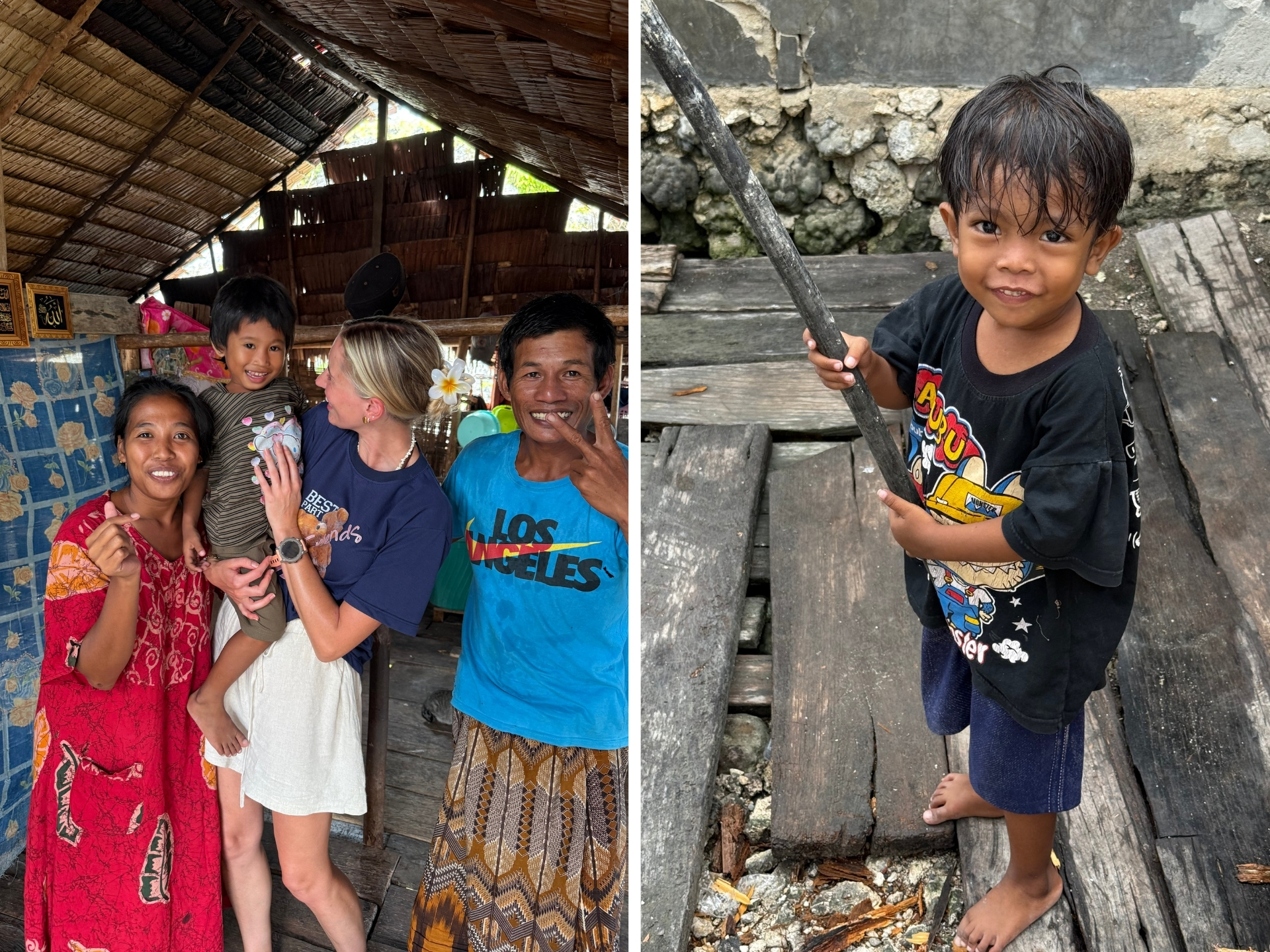
As soon as I arrived in Indonesia, the travel itch came rushing back, and I could not wait to explore Sulawesi. I had been dreaming about this trip for two whole years, and finally, it was happening. The itinerary I had planned down to the smallest detail was coming to life. I soaked up the white-sand beaches, the enthusiastic and sweet children I loved spending time with, the tropical fruits bursting with flavour, and the spectacular dives that made my heart beat faster. They were exhausting weeks. The travel times were long, and most of the time we were busy creating content. Because I was so eager to share this unique destination with you through videos, photographs and blog posts. Unfortunately, that sometimes came at the expense of simply enjoying the moment and being present. But hey, at least I had the perfect shots.
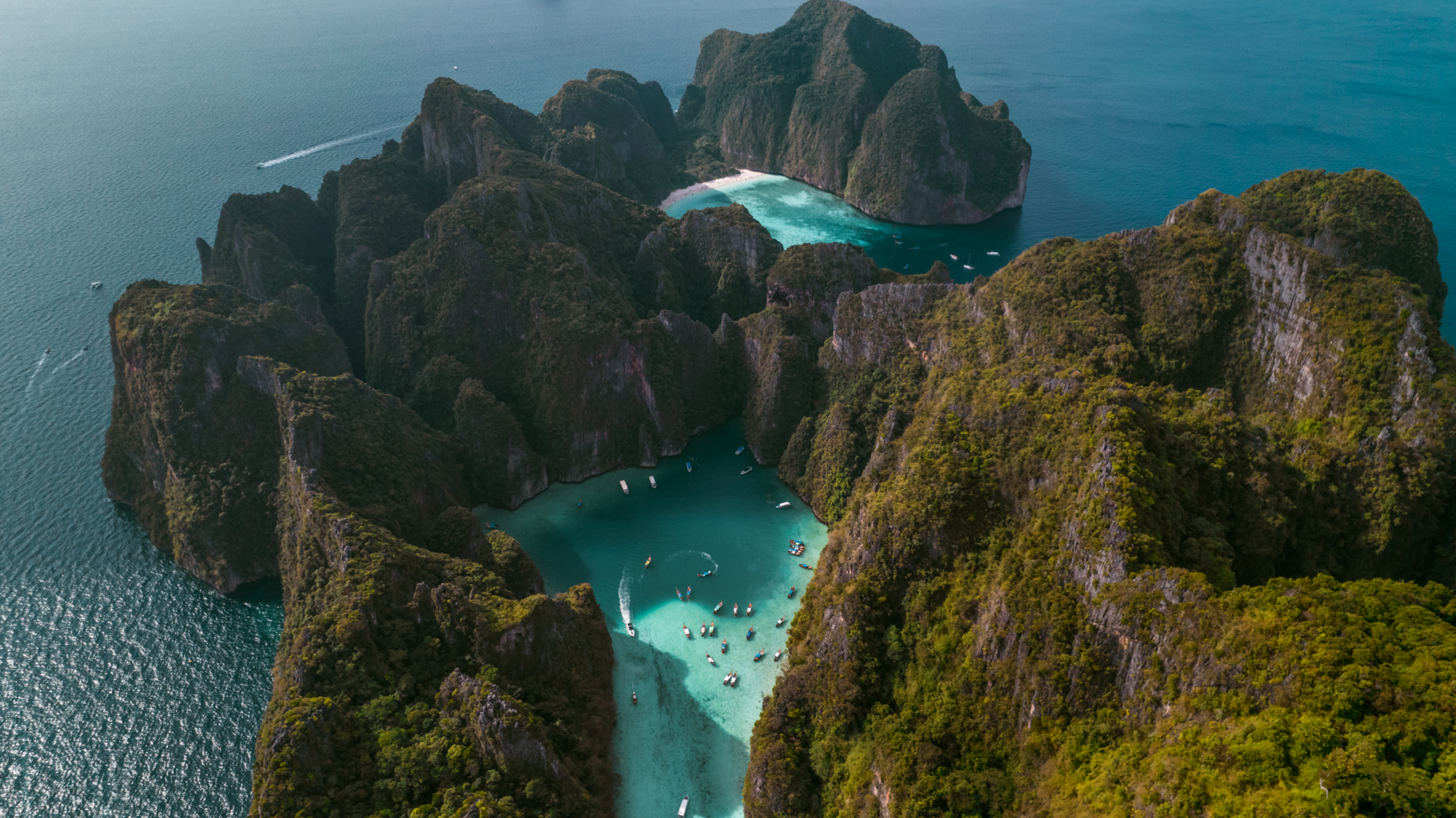
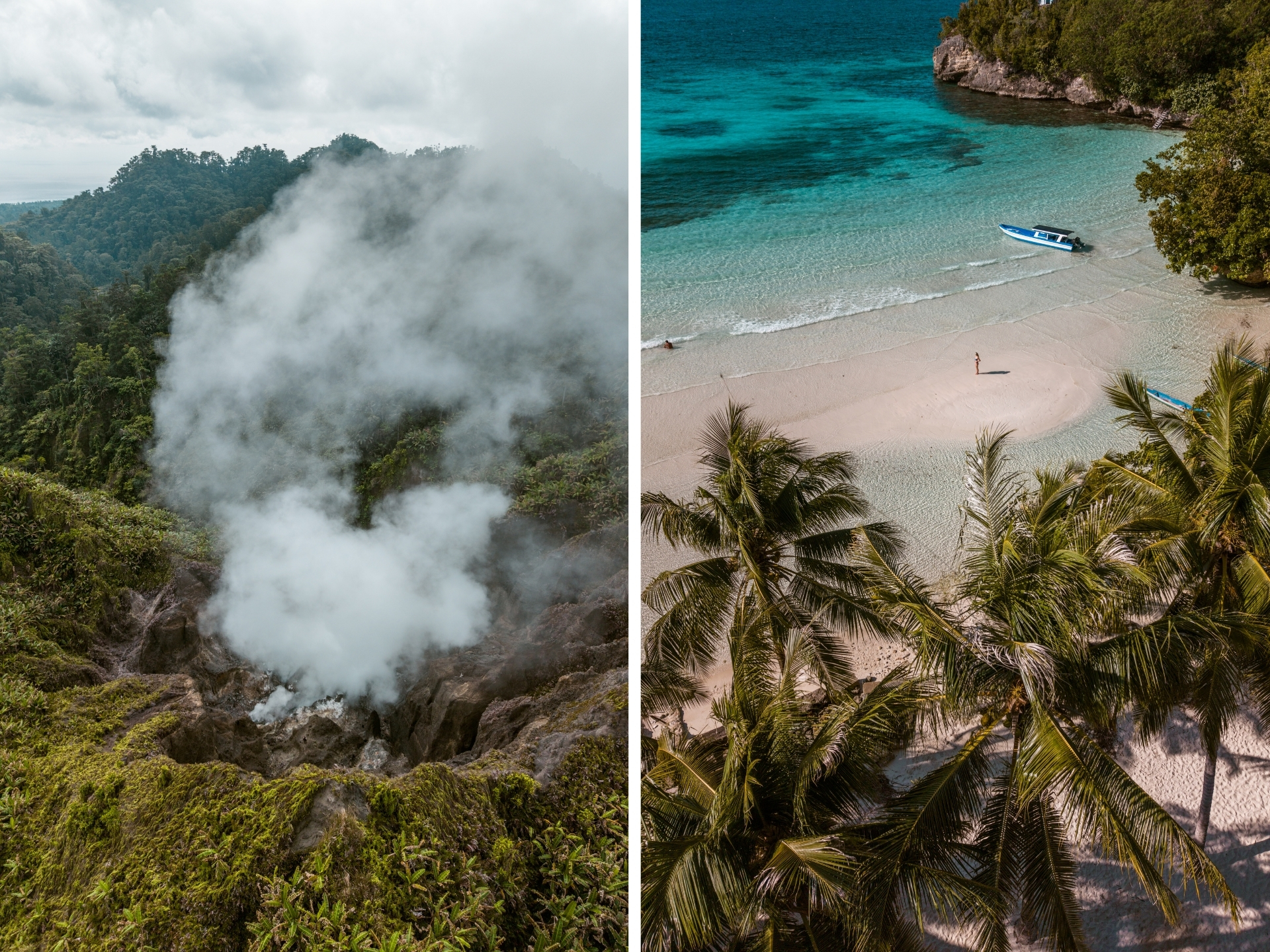
We ended ten nights in the paradise of the Togian Islands — an incredibly remote tropical destination — on the island of Una Una. A volcanic island with black-sand beaches, the rumbling Colo volcano and a unique underwater world.
We spent four days on the island before continuing our journey towards northern Sulawesi.
Sailing towards destination nightmare
I feel frustrated as we board the boat. We are paying quite a lot of money for the crossing from Una Una to Marissa, and we had not expected to be packed together so tightly. The boat looks good and comfortable, so apart from the inconvenience, I don’t immediately think anything of it. I do, however, quickly send an angry WhatsApp message to the resort about the agreed price — especially now that I see how many people are on this boat.
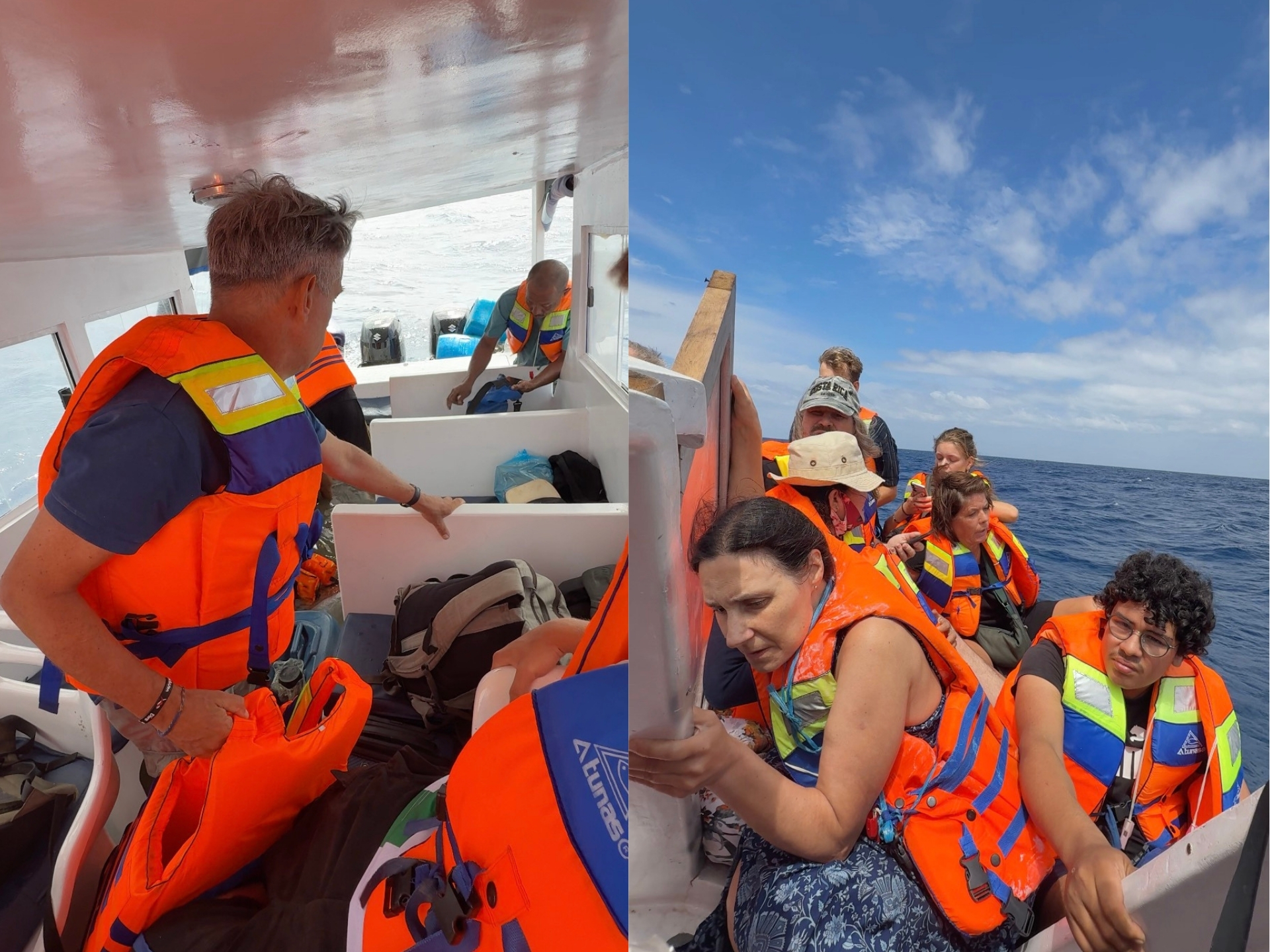
After more than two hours, things start to go wrong. The waves are fairly high and crashing over the boat. We shift around a little, and I decide to move towards the front, where I can sit more comfortably. I notice a sandal floating past in the thin layer of water that is slowly forming inside the boat. Nothing unusual. This happens fairly often. But when the engine cuts out and the weight of the boat causes the stern to start sinking lower into the water, we realise this is serious. There is panic in the captain’s voice as he urges everyone to move towards the front of the boat to keep it balanced. Around ten people squeeze themselves onto the very tip of the boat. I remain inside with the others. We hand out the life jackets — just in case. Despite numerous attempts, they cannot get the engine started again. While Captain Un attaches empty bottles and jerry cans to the engine to help keep the boat afloat, I help crew member Noval bail out the water.
Once again, I feel frustrated because no one else seems to take the initiative to help. Later, I realise that of course everyone reacts differently in situations like this. And many people probably had not yet grasped how serious things really were. But bailing out the water is a losing battle. Wave after wave crashes into the boat, and it is slowly filling up with more and more water. I grab my backpack, filled with valuable electronics and camera equipment, and squeeze myself together with everyone else onto the very front of the boat.
There is no phone signal and we cannot contact anyone. There is no satellite phone on board. Afterwards, I learn that newer iPhones automatically have a satellite function that can send an emergency signal. That could have saved us a lot of suffering. As the boat begins to tilt further and further to one side and I start trembling uncontrollably, begging everyone to release the two life buoys, I urge the others to do so.
Just in time.
The boat sinks deeper and deeper into the water, until eventually there is nothing left to do but jump. We are in the open sea. I cannot stop crying. Somewhere between Una Una and Marissa, my dream has turned into an absolute nightmare.
A movie without a script
Within minutes, the atmosphere shifts from pure panic to calm and silence. We see a long rope floating past and grab hold of it to keep the group together. The sea gives and takes. It is unpredictable. And yet, somehow, I feel an inner sense of calm. As we drift with the rhythm of the waves, we assume it will only be a matter of a few hours. We are about fifteen kilometres from the mainland. The same place where our taxi drivers are waiting for us. Surely, if we don’t arrive, someone will sound the alarm and start looking for us.
At least, that’s what we think. How naive. How trusting. It feels as though I am in the middle of a movie, where every victim plays a different character, each with their own personality. Some more dramatic than others. Milan, the Czech guy, is the comic relief, somehow remaining cheerful despite the situation. The Dutch family is positive and level-headed. The Indonesian woman, floating in one of the life buoys because she cannot swim, is the helpless character. And the German woman is the bitter centre of it all, hijacking the entire situation with her own needs and forcing the rest of us to listen to her endless complaints.
The hours pass incredibly slowly and incredibly quickly at the same time, as we continue believing that people are searching for us. At one point, I need to pee, but my entire body is so tense that I simply cannot. The cramps in my stomach are excruciating, and I feel like crying from the pain. Hinke, the Dutch woman, supports my head with her arm so I can lie down. After a while, I finally manage to relax my pelvic floor muscles. I let out a sigh of relief.
You would expect people to have endless conversations when spending such a long time together in the water. But most of the time, we are completely silent. Everyone is focused on their own needs and on finding some kind of peace in this miserable situation. My life jacket is far too big, and the salt water makes it rub painfully against my skin. Meanwhile, my halter top has slipped down and my breasts are exposed, but at that moment, that is the least of my worries. I am stuck in an awkward, cramped position, with my pelvic and abdominal muscles beginning to burn intensely. The most comfortable position is floating on your back. But that makes me seasick. With one hand, I hold my life jacket closed. With the other, I hold onto my backpack. I know the electronics inside are probably already ruined, but I keep hoping I will somehow be able to recover the SD cards containing my photographs. We created such beautiful images during this trip.
The sun beats relentlessly down on our skin. Our lips feel salty. Our mouths have a foul taste. As I try to empty my mind, I sing a song from the musical Pippin: “Everything has a reason. Everything has a purpose…”
Afterwards, so many people ask me whether I was afraid of what might be beneath us. Thankfully, I have a good relationship with the ocean. I know sharks do not simply attack people — and there are not even any aggressive shark species in this particular area. The electric shocks against our skin from the stinging jellyfish, together with the burning pain and the constant cooling of our bodies, are the worst things we experience at that moment.
The most random thoughts drift through my mind. “Are they going to make a movie about us now, with our photographs rolling through the credits?”
“Are we actually going to survive this?”
Between stars and darkness
When the sky turns golden and we witness a breathtaking sunset, we realise that we are going to have to spend the night out here. It will be a long, dark and, above all, cold night. We count down the hours until sunrise. At fifty kilograms, I do not have much body fat. My entire body is trembling and aching from the cold. I can feel myself reaching my limit, and I am terrified that my body simply will not make it through the night. I am in so much pain, and between the cold and exhaustion, I struggle to stay conscious. I do breathing exercises to try to calm myself down.
Mathijs asks permission to open the small suitcase belonging to the German family, which is tied to the end of the rope. There are no valuables inside. Only clothes. He pulls out an awful long-sleeved Minecraft shirt with a hoody, as well as a pair of long leggings. It takes an enormous amount of effort and energy to get wet clothes on while floating in the ocean. I desperately try to keep my head above water as he helps me get dressed, while another person holds onto my life jacket. Even though I am still freezing, the extra layer helps. I am so incredibly grateful for it. While the captain tries to keep me warm and Mathijs speaks encouraging words to me, we suddenly see the lights of a fishing boat in the distance. We try to attract their attention with a flashlight. The light is unfortunately far too weak. I scream at the top of my lungs, while others blow the whistles attached to their life jackets, hoping someone will hear us. I immediately think of the final scene of Titanic, where Rose is left alone on her floating piece of wood while Jack disappears into the depths.
Our rescue is close. With renewed strength, we swim towards the boat as a group. It is useless. The waves are as high as walls. The current is strong and relentless, and clinging to the rope makes it incredibly difficult to move forward. Captain Un — who is still wearing his fins and has a diving mask around his neck — decides to swim towards the boat alone to get help. It will be the last time we ever see him. His body has still not been found.
The night is horrific. I feel that I am going to die, and I no longer have the strength to keep fighting. I am at peace with it. I am allowed to go. The German woman is lying in one of the life buoys, arguing with the Indonesian woman. Tensions are running high. The Indonesian woman cannot swim — meaning she cannot help the group — and is occupying an entire life buoy, making it difficult for others to hold on comfortably. We hear shouting, and she hisses that the Indonesian woman is a monster. She also demands the sweater I put on several hours earlier. I refuse. I tell her she can have the clothes back once we survive this. I am furious at her selfish remarks. Later, she will apologise for them, but in that moment, I see very little humanity in her.
My body is so cramped and stiff that I briefly take over the spot in the life buoy. The position is much more comfortable, but it feels warmer in the water than outside. Because of the cold, I cannot stay there for long. This is also the moment when Mathijs thinks I will not make it through the night.
Not tonight. Despite the endless shivering and unbearable pain, after many hours we finally see the first rays of sunlight. The Dutch family — comfortably floating on their backs — has even managed to fall asleep for a while, but in doing so, they have lost the only drinking water they were trying to save. Another blow. Because how ironic: surrounded by water, the need for fresh drinking water is so precious and so desperate.

“We are going to die”
Saturday, July 25. At dawn, we expect to see a drone or helicopter. Or at the very least, some sign that a search operation is underway. We stare at the blue sky, where the occasional bird flies past, and joke that we should send out a message for help. Una Una is coming back into view. We have drifted around thirty kilometres during the night. When several more hours pass without seeing any sign of a search party, we fear the worst. We start crying out of sheer desperation. “They are not looking for us. I can’t do this another night.” We take the action camera out of my backpack, which I have kept tightly beside me for more than twenty hours, and record a goodbye video for our families and friends. The action camera is tied around Math’s wrist so that they can find the footage if our bodies are recovered or wash ashore.
It is my sister’s birthday today. I feel guilty knowing that I cannot wish her a happy birthday. Maybe I never will again. I imagine my nieces attending my funeral. My family does not even know what my favourite photo is. Which music they should play. Somewhere in the distance, we spot a lighthouse. We see it as our only chance of survival. It looks like it would take around ten hours to swim there, although of course, that is nothing more than a wild guess. After a short discussion, half of the group — us and the Dutch family — decide to swim towards the lighthouse. We hope to reach it by evening, increasing our chances of being spotted by a fishing boat. The other half of the group stays behind with the life buoys and the rope. The six of us begin swimming, holding hands and floating on our backs. Unfortunately, I have to leave my backpack behind. Milan ties part of it to the life buoy and part of it around the Indonesian woman’s foot. I have complete faith that we will make it and be reunited.
We let the metre-high waves carry us and use them to scan our surroundings every now and then. We have no idea how much time has passed when we can no longer see the other group and decide to rest for a while. Jelka still has a packet of Fisherman’s Friend mints in her little bag, and we decide to each take one. But because everything is soaked, there is nothing left of the mints. They have turned into one watery substance. I dip my finger into it. The taste in my mouth awakens all my senses. What pure bliss. It gets rid of the awful, dry taste in my mouth and creates a small moment of connection between our group. We enjoy it. We even laugh for a moment. Before continuing to swim.
A dot on the horizon
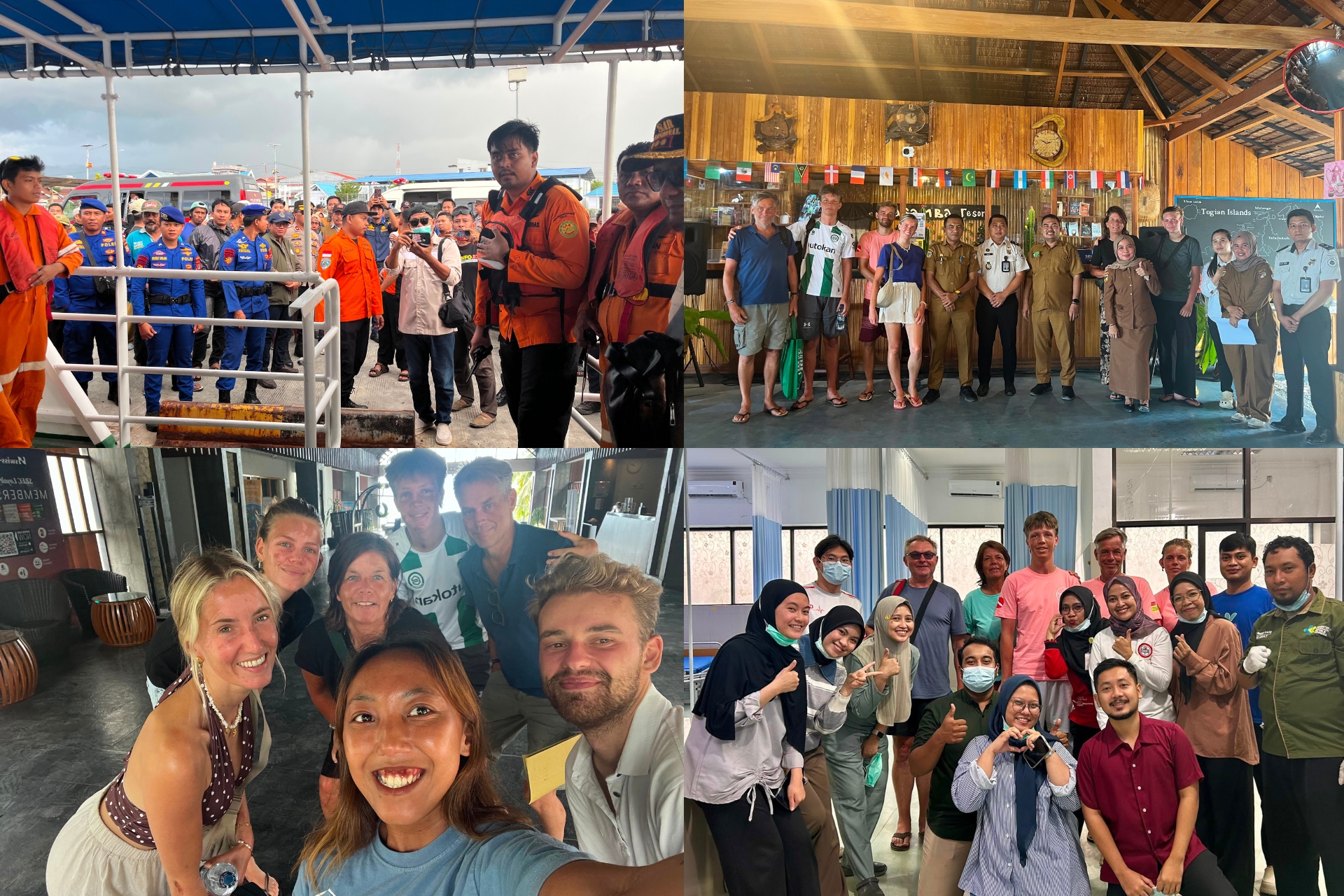
And then, suddenly, we see a boat appearing in the distance. We do everything we can to attract their attention. We scream, wave our arms and pull the stick of the action camera all the way out, placing a bright orange life jacket on top of it. The day before, at around 5 p.m., an alarm had finally been raised. Too late to continue the search that same day. In the early hours of the morning, Marine rescue boats had set out around Marissa, while all the boats from Sanctum Una Una had been deployed to search for us. And they had succeeded. They first found the rest of the group and then, following their instructions, headed in the right direction to find us. At first, they think we are simply divers because of the orange life jacket attached to the stick. Still, they decide to come over and take a closer look.
As the boat gets closer, the emotions become overwhelming. We start crying with relief and happiness, knowing how differently this could have ended. We hug each other in the water before being helped aboard the rocking boat. We are saved. The journey back towards Una Una is intense once again, with huge waves and very little shelter. We are given water and food, and I am shaking uncontrollably from hypothermia and the fear of everything we have just been through. When we arrive at Sanctum, the entire resort welcomes us with open arms. Guests and staff applaud. There are tears, hugs and people helping wherever they can. Everyone had been desperately worried about us, and we are incredibly grateful for all their help. There are several doctors among the guests who immediately take over our care. People hand out underwear and clothes, and the resort immediately buys toothbrushes, flip-flops and other basic necessities. Everything we had is gone.
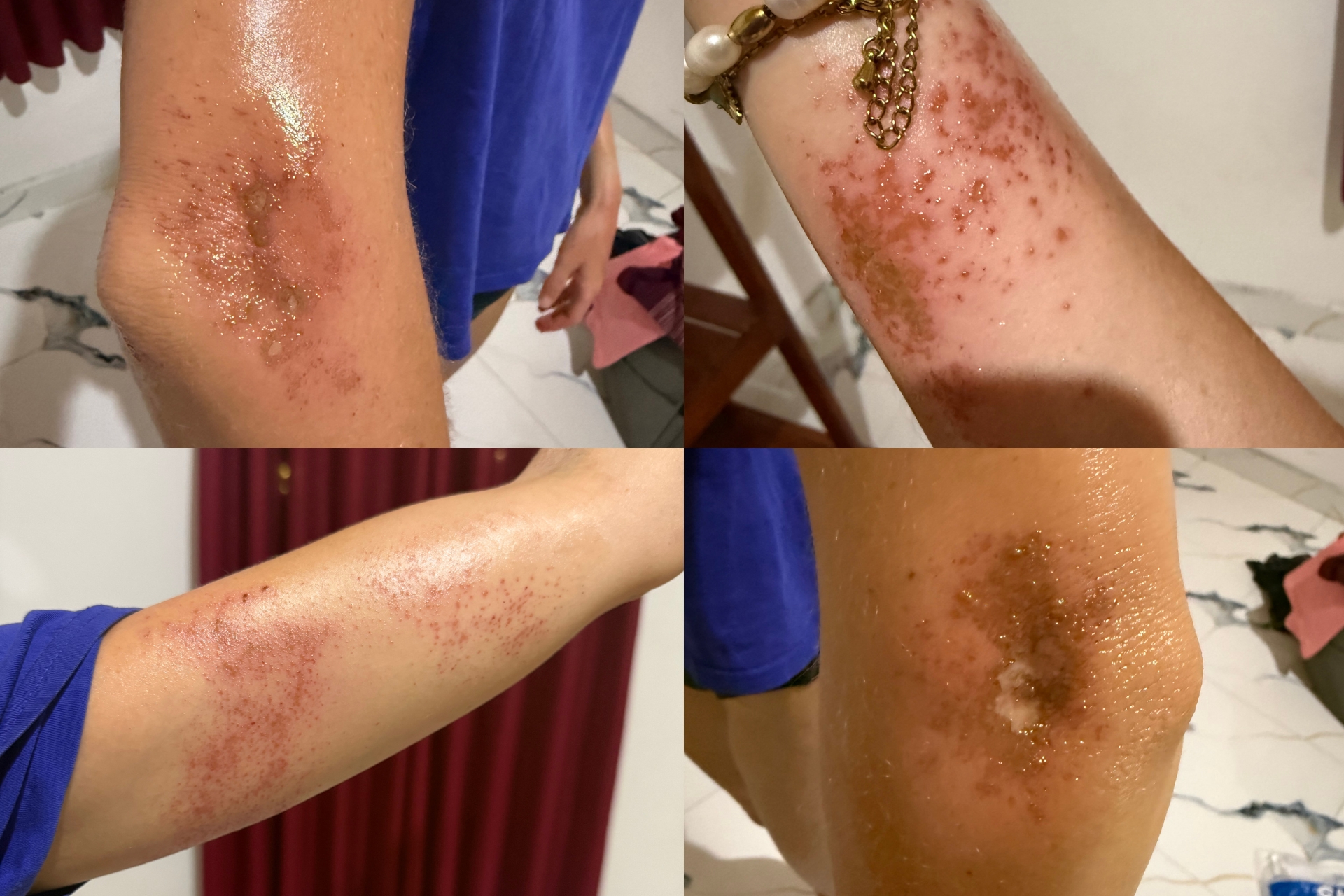
Our bodies are covered in painful abrasions. Our faces are badly sunburned, developing thick blisters and peeling skin over the days that follow. The warm shower is wonderful for warming my hypothermic body, but absolutely excruciating against my burned skin. My hair has tangled itself into thick dreadlocks, and it takes more than an hour — and half a bottle of conditioner — to get all the knots out. My body is so weak that I keep blacking out and seeing dark spots in front of my eyes. I cannot stand. Sitting on my knees, Math helps me shower.


My life left behind at sea
Once I have recovered a little and we have managed to contact our worried families and friends, I ask about my backpack. The answer hits me hard. While rescuing the other group, the backpack had come loose from the life buoy. They left it behind. I completely break down. For around twenty-four hours, I had clung desperately to that backpack. I had done everything I could to make sure I did not lose it. And now, having escaped death myself, I had lost that too.
I am alive. But a part of me died that day. The electronics can be replaced. The images stored on them cannot. Those are gone. Ten years of work on my hard drive. Important documents. Precious memories. A piece of my life. Washed away by a single wave. The grief is overwhelming. So is the anger. And on top of everything else, I feel incredibly stupid for never having made an online backup.
As if my mind and body have not already got enough to process, the night that follows is horrific. I cannot sleep. Partly because of the pain, but also because of everything racing through my head. The ugly wounds on my body. My stiff muscles. My burned skin. The emotions. At four in the morning, I get up. Crying, I go for a walk, call my friend and get a glass of water. Afterwards, I try to sleep again, but sleep never comes.
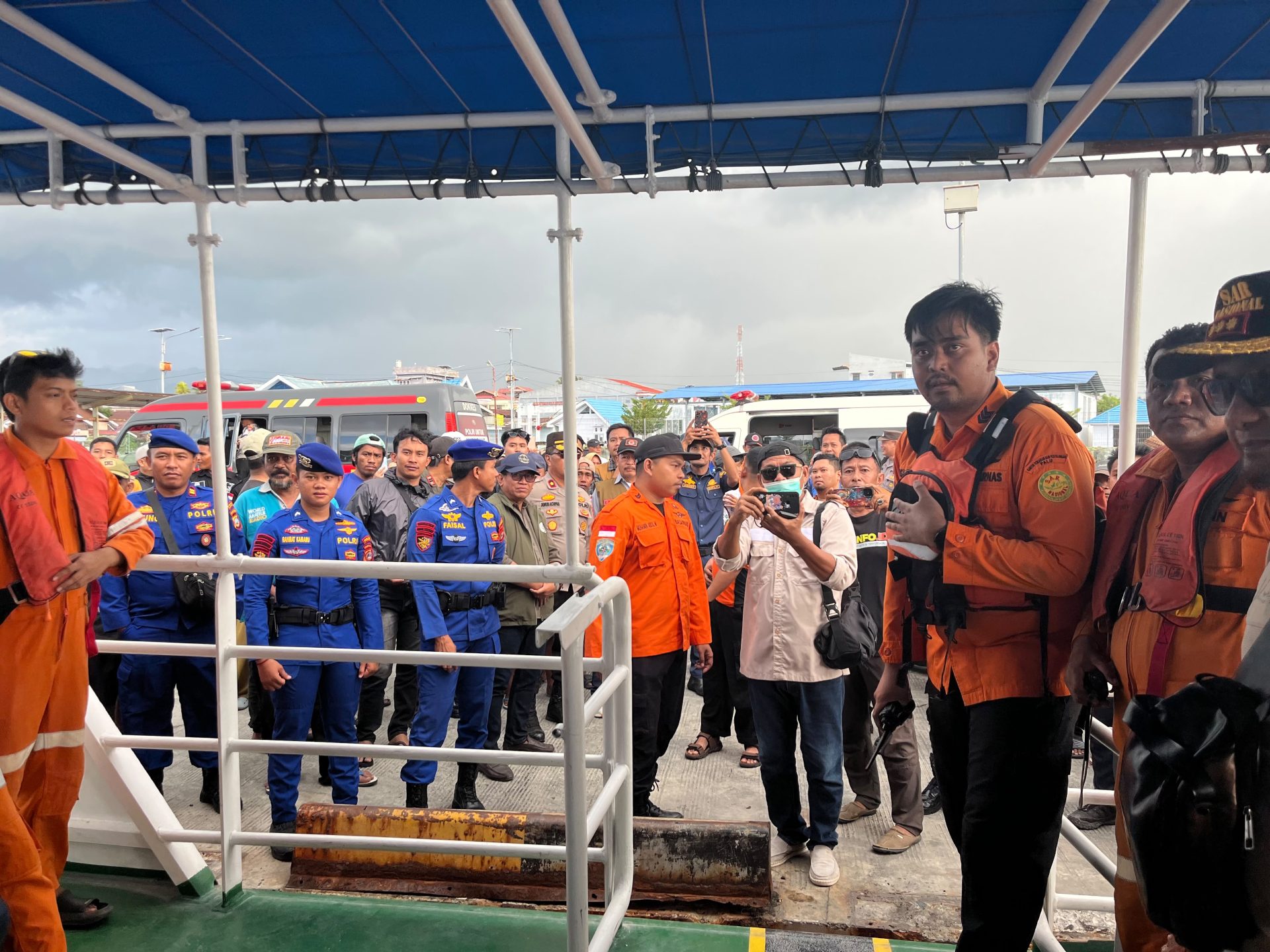
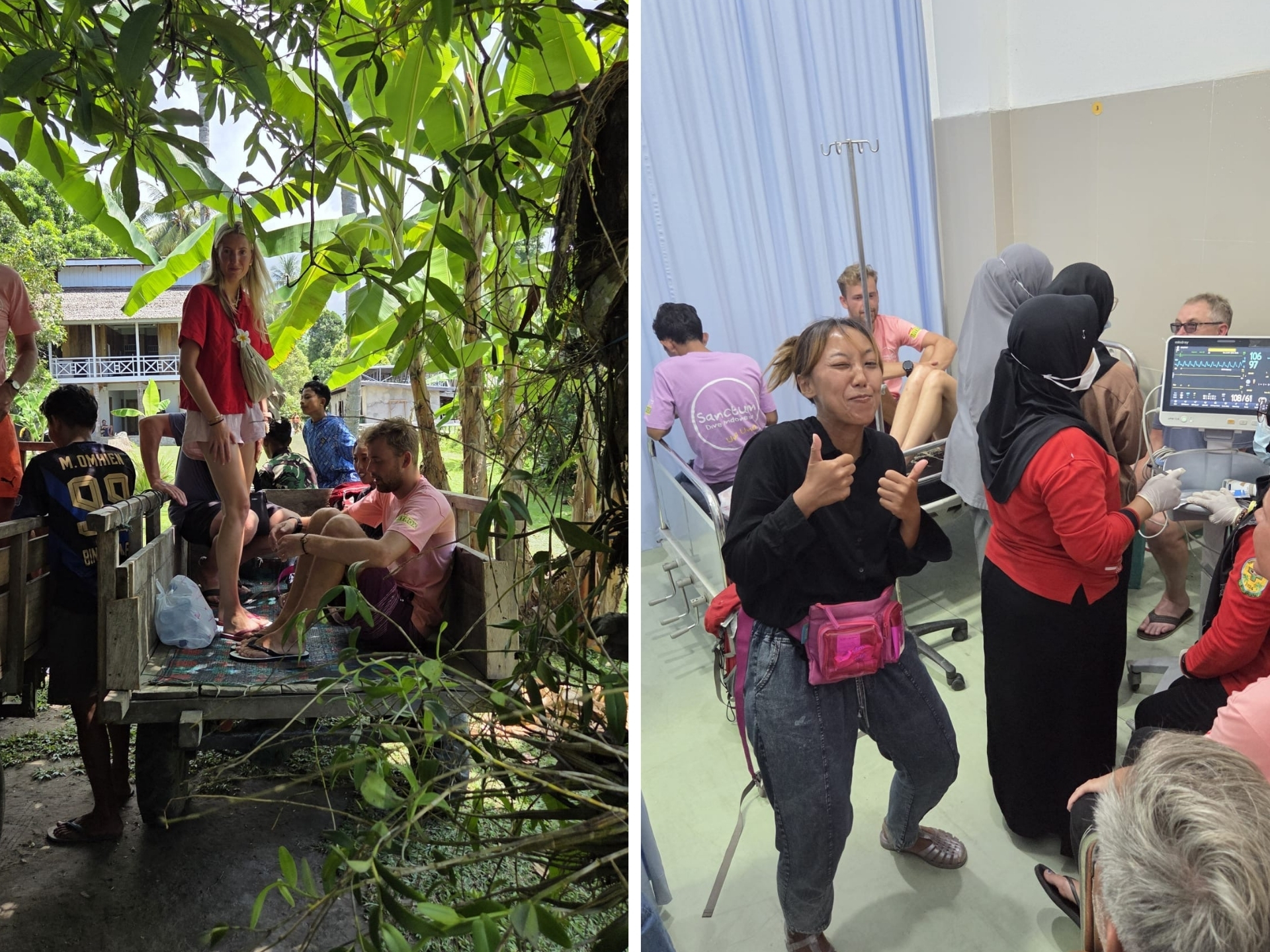
The following day, a large navy vessel comes to collect us, with a doctor on board. The journey is comfortable, and after more than two hours at sea, we arrive in Ampana. All crossings towards Marissa are temporarily banned because of the rough sea and the incident. Meanwhile, we have become big news. When we arrive, an estimated hundred people are waiting for us. Photos and videos are taken as we are escorted towards the ambulances that are already waiting. With sirens blaring, we are taken to hospital for further examinations. And yes, even there, more photographs follow: with the medical staff, with immigration… Local journalists come and go. My inbox and social media accounts are flooded with messages from the press. But honestly? At that moment, I simply do not have the energy to give interviews. I am completely exhausted.
Nada, the manager of Sanctum Resort, stays with us the entire time. Together with immigration, she takes care of all the important arrangements. They go to the police to organise the necessary documents. Each of us receives €100 from the resort to buy essential items. Our accommodation and food are also fully taken care of. And perhaps that is one of the greatest forms of help you can receive after something like this: not having to think about all the practical things yourself. After such a profound trauma, it is incredibly comforting simply to know that someone else is taking care of things. That we are safe here. That we are in good hands. Kudos to the entire team at Sanctum Resort. They handled this unbelievably well and did everything they could to make us as comfortable as possible.
Meanwhile, I also contact our insurance company, hoping they can repatriate us as quickly as possible. The embassy is involved too, to arrange emergency passports. Because yes: our passports, bank cards and money are also somewhere on the bottom of the ocean.
From strangers to family
It takes a week for our emergency passports to finally be arranged and for the insurance company to organise a flight home. During that week, we travel from Ampana to Luwuk, while mentally trying to process what has happened. Then we fly via Makassar to Jakarta, where we can finally collect our emergency passports. It has become a very strange journey. What started as an unforgettable adventure filled with spectacular dives has suddenly turned into a route of embassies, hospitals, insurance companies and flights. Milan continues his journey after just one night in Ampana. He heads to Bunaken to go diving. Despite losing his belongings and everything we have been through together, he decides to make the most of it. A few more days of enjoyment. A few more dives. A little more sunshine. What a man. Maybe that is also a way of surviving: not carrying everything you lose along with you to the next destination.
Meanwhile, the Dutch family and I stay together. We eat together, talk, laugh and, above all, try to simply be human again. For a week, we share not only the same hotels and journeys, but also the silences between conversations, the exhaustion, the memories and the emotions that sometimes unexpectedly come rushing back. Until our paths eventually separate when we leave for Jakarta. Saying goodbye is hard. Because how do you say goodbye to people you barely knew, but with whom you suddenly shared something that you will probably never experience with almost anyone else? A week ago, we were strangers. Now it feels like we are leaving family behind. Out of that connection, a WhatsApp group called The Survivors is born. A small digital lifeline that we can all hold onto. To stay in touch. To know how everyone is doing. To remind each other that we went through this together. And, above all, to see each other again someday. Because some people enter your life through the front door. Others come in through a disaster.
And then there is Nada. Officially, she is not a Survivor. She was not on that boat. She did not have to fight for her life in the ocean. But to me, she absolutely belongs to our group. Nada was there from the moment we arrived. She organised whatever needed to be organised, caught us whenever we could no longer hold ourselves together and made sure that, despite everything, we felt safe. But she did so much more than that. We cried together. We laughed. We sang. We shared stories and we shared silences. And somewhere along the way, a woman we had not known at all a week earlier became someone who will forever hold a very special place in my heart. A beautiful woman, with an incredibly warm presence and such a pure soul. I will never forget her. Until we meet again.
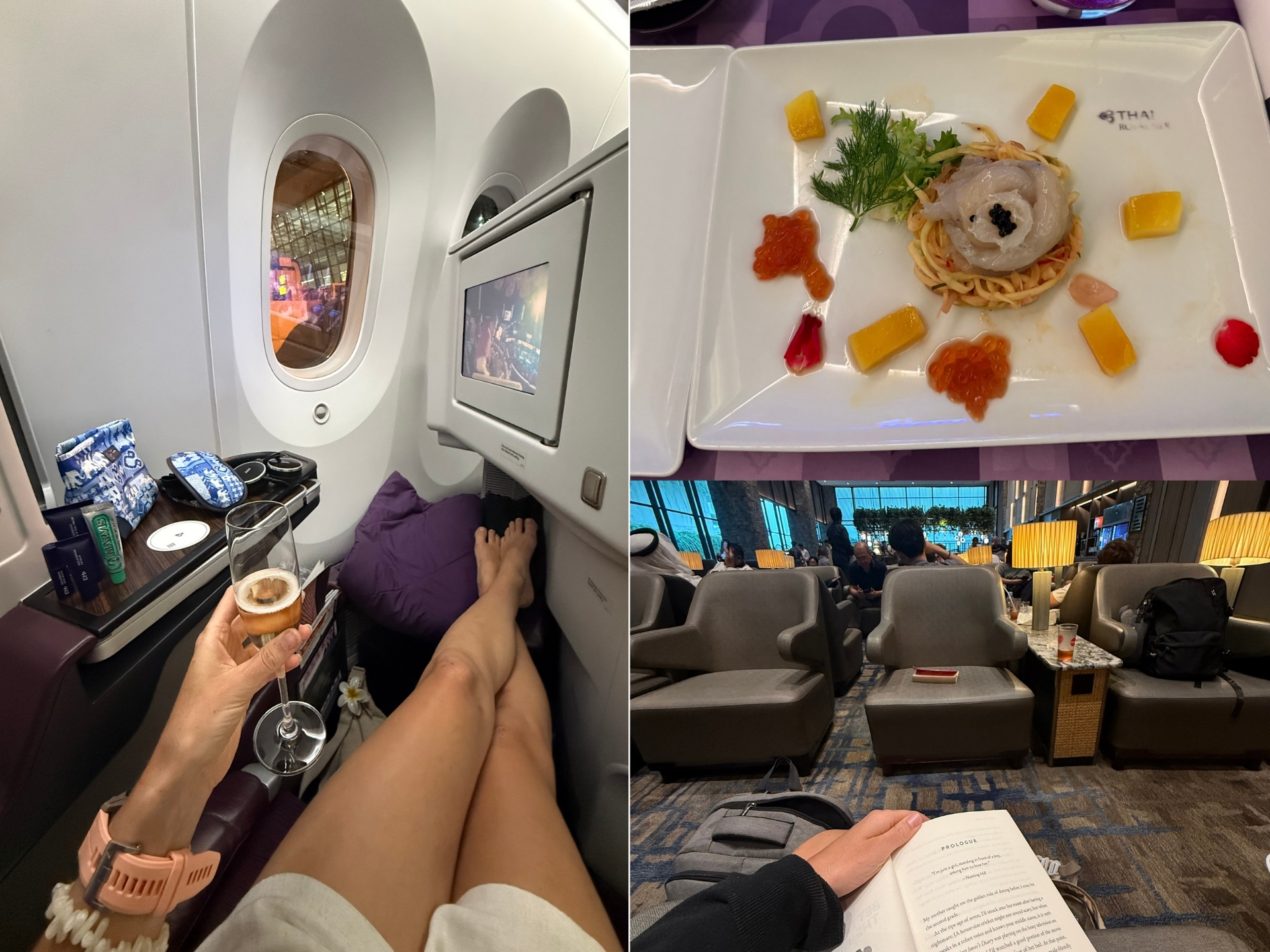
And then comes the moment when we are finally allowed to go home. Our medical insurance flies us home in business class. A luxury that feels strangely symbolic. After everything that has happened, we are finally allowed to sit down. To arrange nothing. To simply sit and enjoy the comfort. As soon as I board, I order a glass of champagne. A toast to life and survival.
Lost at Sea, Finding My Way Back
The financial aftermath of this accident is enormous. More than €10,000 worth of equipment has been left behind in the ocean. Later, it becomes clear that the insurance will cover little — if anything. Even the insurance for my new drone turns out to be one big joke. “Care” is apparently mostly just a nice word on paper. But okay. Money is money. It returns. That is what I keep telling myself. When I arrive home, my family welcomes me with open arms. And it feels incredible to once again be surrounded by people who feel familiar. My mum has prepared an amazing brunch, and for a while, the world consists of food, hugs and telling stories. Just being home again. Safe. I quietly swallow the comments about how I should return to teaching and stop working for myself. I know they come from a place of concern. People want you to choose security. Something safe. But after everything that has happened, security suddenly feels like a very relative concept.
When I am eventually left alone at home, the mental impact truly hits me. During the first week, I am barely capable of doing anything. I feel empty. Sad. As if someone has pulled the plug on my body. Physically and mentally, I am completely exhausted. Starting the washing machine or doing a little cleaning already feels like too much. My body is not cooperating either. For two weeks, I have been struggling with my stomach and intestines. I have almost no appetite, diarrhea, and my blood pressure remains extremely low. I feel weak, drained and completely without energy. My body is home, but my mind is somewhere between nightmare and reality. Thankfully, most of the wounds slowly begin to heal. Only my elbow remains a story of its own. The wound will need plenty of time, ointment and bandages before it finally closes. And somewhere deep down, I know there is a good chance it will leave scars. Scars that will forever remind me of what happened.
After a week of wallowing rather heavily in self-pity, I decide it is time to pick my life back up again. Step by step. I meet up with friends. I start exercising again. I try to find some kind of rhythm in my days. No big leaps. Just small things that slowly make me feel like I am finding myself again. And then something happens that deeply touches me. A few close friends and fellow travel bloggers set up a GoFundMe to help me raise some money. People I know, but also complete strangers, contribute. The support. The messages. The people willing to listen. The people who are simply there. It makes me realise just how special the community around my stories and travels has become over the years. A community I originally created to share my adventures with others, but which is now standing beside me when I no longer know how to move forward myself. I am grateful. I use part of my savings to replenish my account and buy the equipment I need to start again. It hurts to spend so much money again on things I had only just bought. But I want to move forward. I want to create again. To travel again. To tell stories again.
Because yes, a part of me was left behind in that ocean. There is a version of myself that died that day in Indonesia, together with a backpack filled with photographs, files, memories and dreams. But I am still here. And my dreams are still big. My urge to travel has not disappeared. If anything, perhaps the ocean made something clear to me that I already knew somewhere deep down:
Life is too fragile to keep putting your dreams on hold. So I pick myself back up. Because the waves took a lot from me. But they did not break me. As long as there is a horizon, I will keep sailing towards it.